Emergency Shipping Container Recovery at the Port of Long Beach
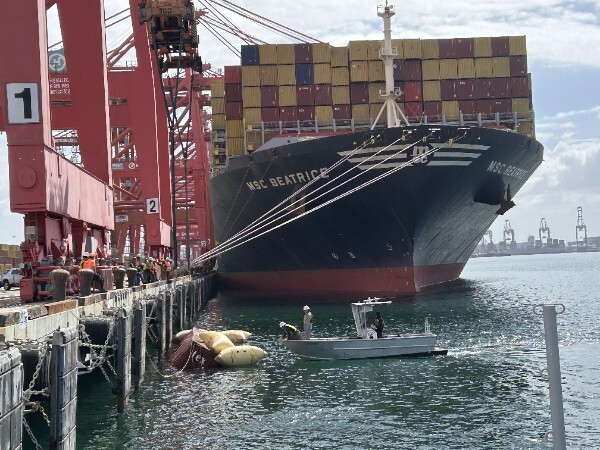
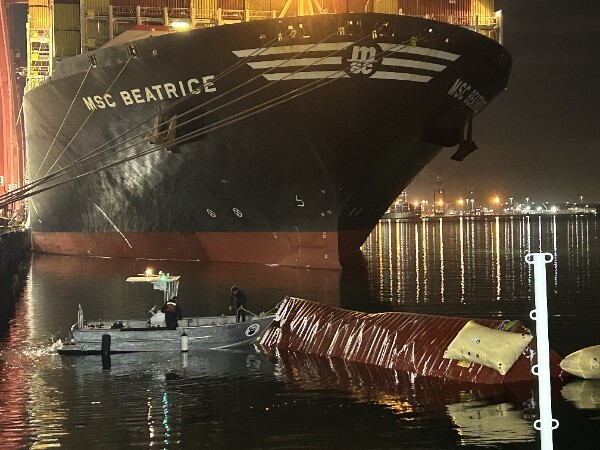
When a terminal operator at the Port of Long Beach dropped a shipping container into the water between a 1,000-foot vessel and the dock, Myers Marine Division was on the phone within minutes. By 1:00 a.m., the container had been pulled free of the hull, rigged, stabilized with heavy salvage lift bags, and secured dockside. All without risking a night lift on a structurally compromised box with unknown contents. Three nights later, the same terminal called again. This time there were three.
Between the Hull and the Dock
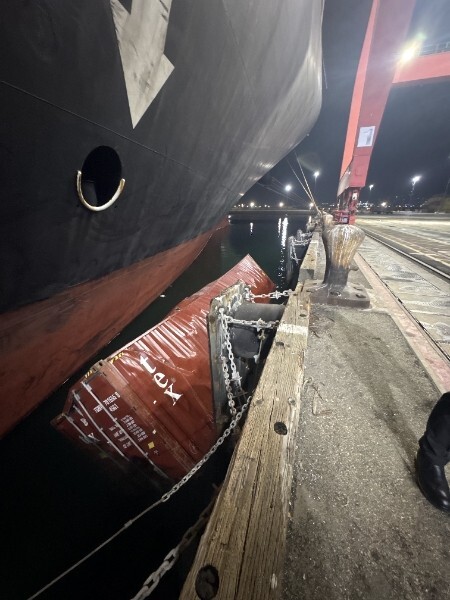
The situation was straightforward in its urgency and complicated in its geometry. A fully loaded shipping container, weight unknown and contents unknown, had gone into the water at the terminal and come to rest wedged between the hull of the berthed vessel and the dock face. It could not be lifted in place. It had to be moved first.
The risks were immediate and layered. The wedged container was pressing against the hull of a vessel with cargo operations nearby. Any uncontrolled movement could cause hull damage. The container's contents were unidentified, meaning any breach risked a spill directly into the harbor. And until the container was clear of the channel, it was a navigational hazard for other vessel traffic operating in the basin.
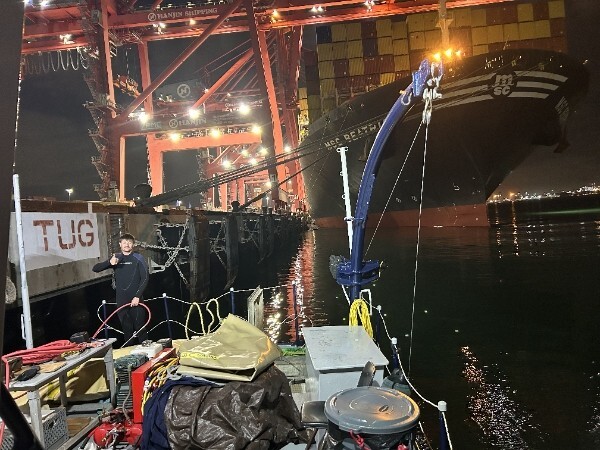
Myers Marine Division arrived on-site within approximately 90 minutes of the initial callout. Two vessels deployed: the Marlin, Myers Marine's 43-foot primary dive and operations vessel, provided the surface-supplied air diving system and served as the operations platform for the job. The Sting Ray, a smaller Myers Marine salvage response vessel, took the rigging position in the confined space between the hull and the dock face. Divers entered the water to assess the geometry and rig a heavy salvage line to the container. The Sting Ray then applied tension, with the Marlin trailing and positioned to assist with container movement, pulling the wedged container clear of the hull and out into open water, away from the vessel's side and out of the immediate damage zone.
With the container now floating free in a clear area of the basin, the operational question shifted: how to secure it for the rest of the night without creating a new hazard.
Stabilize First, Lift in Daylight
The container was not in a condition to be lifted at 1:00 a.m. A shipping container that has been dropped and has spent time in the water may have suffered structural compromise, including deformation at the corners, stress at the door seals, and frame distortion from the impact load. A rapid lift applies sudden, uneven load to that structure. If the container tears open during the lift, whatever is inside goes into the harbor.
The decision to hold the lift until daylight was deliberate, not logistical. Lifting a structurally questionable container properly requires a slow, controlled operation, the kind that takes most of a workday to execute safely. Attempting that at night, with limited visibility, in an active commercial port, on a container whose contents were entirely unknown, was not a risk worth taking. The environmental and navigational consequences of a spill at that hour, in that location, would have compounded the original incident significantly.
Instead, Myers Marine deployed heavy salvage lift bags, rigging approximately 40,000 pounds of lift capacity to ensure the container could not sink overnight. It was then towed and secured alongside the terminal dock, stable, stationary, and away from active vessel traffic. Environmental containment came first. Navigational clearance was secondary.
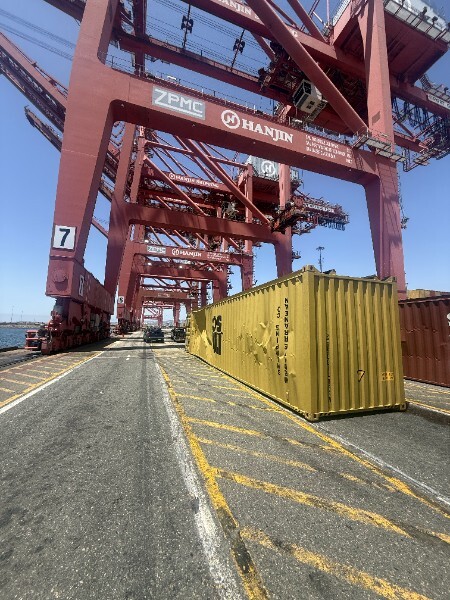
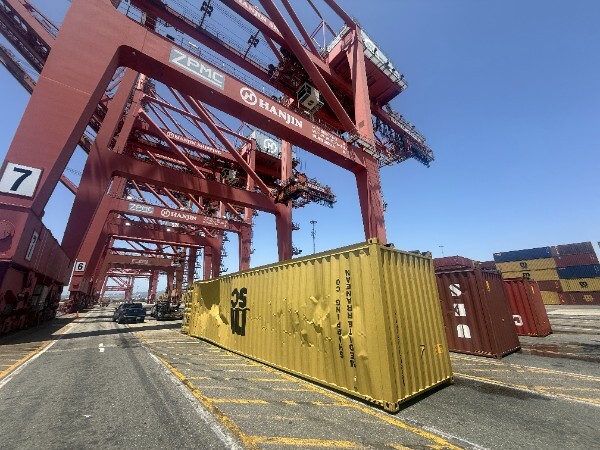
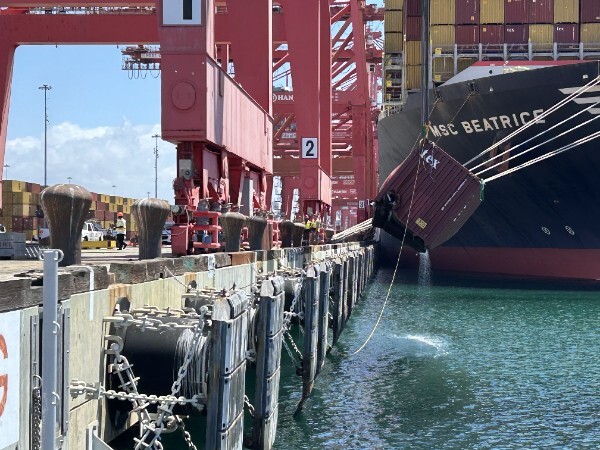
When daylight came, divers returned. The gantry crane's heavy chain rigging was lowered to the water, and divers worked below the surface to attach the chains to the container's load-bearing rigging points. The crane took load slowly, deliberately, giving the structure time to stabilize under tension rather than shock-load a potentially compromised frame. The container cleared the water and was set down on the dock. The chains were de-rigged on the dock, and the operation was complete.
Recovered to the Dock: Twice in Three Nights
Three nights after the first recovery, the same terminal called at approximately 3:00 a.m. This time three containers had gone into the water.
Myers Marine Division was on-site within the same 90-minute window. The recovery process was repeated in sequence: three separate rigging operations, three deployments of heavy salvage lift bags, three containers secured dockside before dawn. By 6:00 a.m., all three were stabilized. Unlike the first incident, conditions allowed the lifts to proceed that same day rather than holding until the following morning.
The two-incident response ran roughly the same planning and risk calculus on back-to-back emergency callouts. The framework did not change: assess the geometry, rig and move each container clear of the vessel, stabilize it so it cannot sink overnight, then lift under controlled conditions when there is time and visibility to do it right.
That consistency matters in a port environment where a wedged or sinking container is a dynamic hazard. It can shift position. It can sink further. It can damage the hull alongside it or become a navigational obstruction in an active shipping channel. A contractor that can deploy multiple salvage vessels, complete underwater rigging operations, and be in the water on an emergency basis within 90 minutes of a callout is a different class of response than what most terminal operators are used to calling.
The Vessels and Gear Behind a 90-Minute Response
The Marlin is Myers Marine's primary dive and maritime support vessel: 43 feet of aluminum construction, dual Cummins diesel engines, a 2,000 lb capacity deck davit, and a full surface-supplied air diving system aboard. It is the operational command platform for jobs of this complexity. The Sting Ray is a smaller, specialized salvage response vessel in the Myers Marine fleet, sized and rigged for high-load pulls in confined marine environments where a larger vessel cannot maneuver. Together the two vessels handled what a single platform could not: rigging tension in a tight wedge space and full dive support operations simultaneously.
Heavy salvage lift bags are rated by buoyancy load. The approximately 40,000 pounds of lift capacity deployed here were sized to the anticipated container weight, rigged at calculated attachment points, and monitored for stability before the vessels stood down for the night. These are not general-purpose inflatables. They are marine salvage equipment selected to hold a specific load through tidal movement, vessel wash, and changing water conditions overnight.
The gantry crane chain rigging used for the final lift is a distinct operation from the initial vessel-based pull. Commercial divers attach heavy chain slings to the container's corner castings or load-capable structural members before the surface crew takes crane tension. The chain is selected by load rating, and the lift is executed slowly enough that a compromised container can be managed rather than torn open under shock load.
For terminal operators, facility managers, and port authorities dealing with a dropped container or submerged cargo event, the priority sequence is not complicated: contain it environmentally, clear it from navigation, then recover it on a timeline that protects both the cargo and the people executing the lift. Myers Marine Division is available around the clock for emergency marine salvage and diving response. Learn more about our salvage services or review the vessels deployed in this operation on our Marlin vessel page.