Commercial Diving the Queen Mary Propeller Room: Coin Recovery and Corrosion Survey in Long Beach
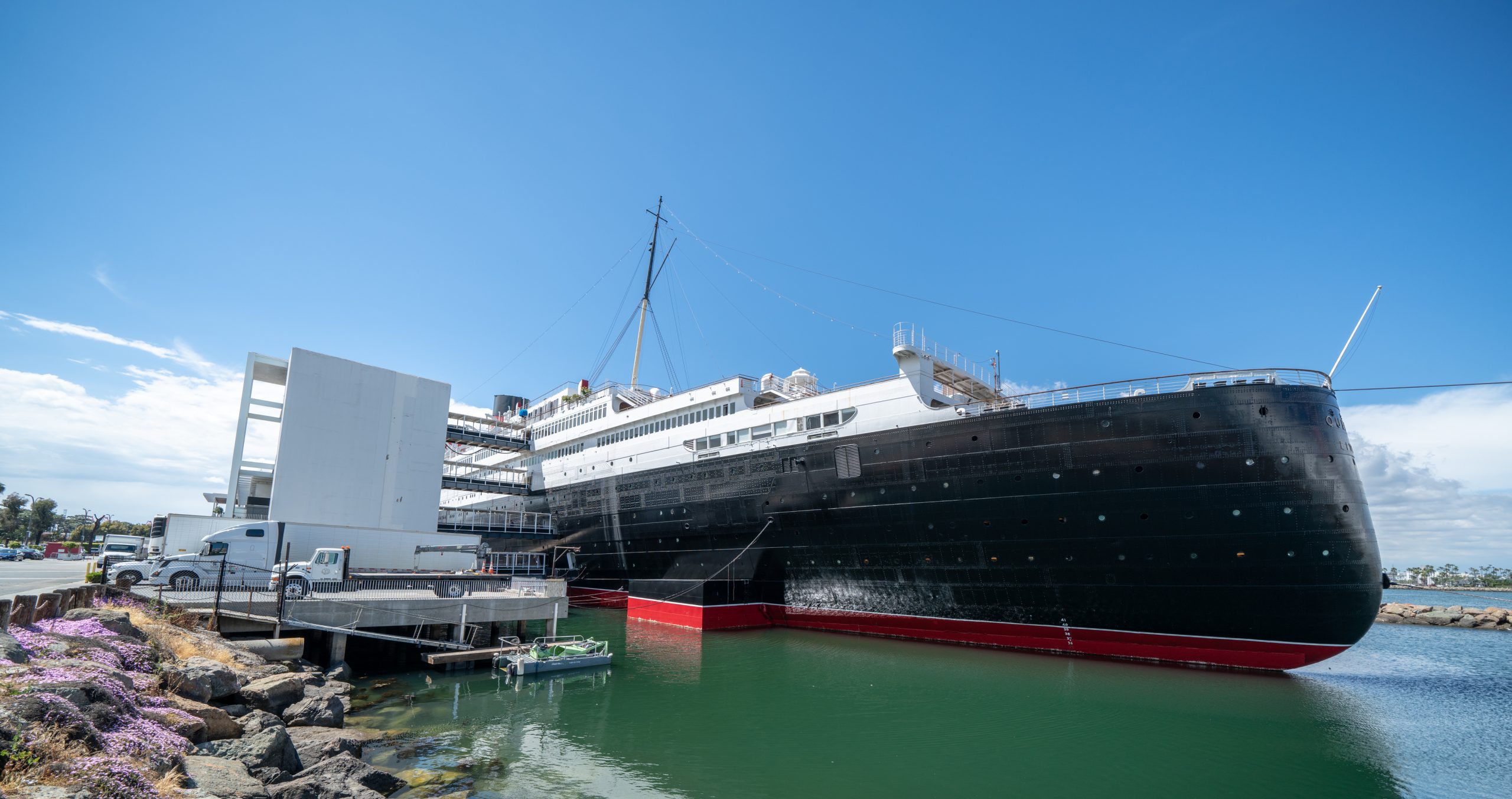
The RMS Queen Mary arrived in Long Beach, California on December 9, 1967, ending a 39-day final voyage that took her around Cape Horn. She has not moved since. For more than half a century she has served as a hotel, museum, and convention venue, a floating National Historic Landmark where visitors walk decks that once carried Winston Churchill, Walt Disney, and more than 800,000 military troops during World War II. She is one of the most recognizable ships on the planet.
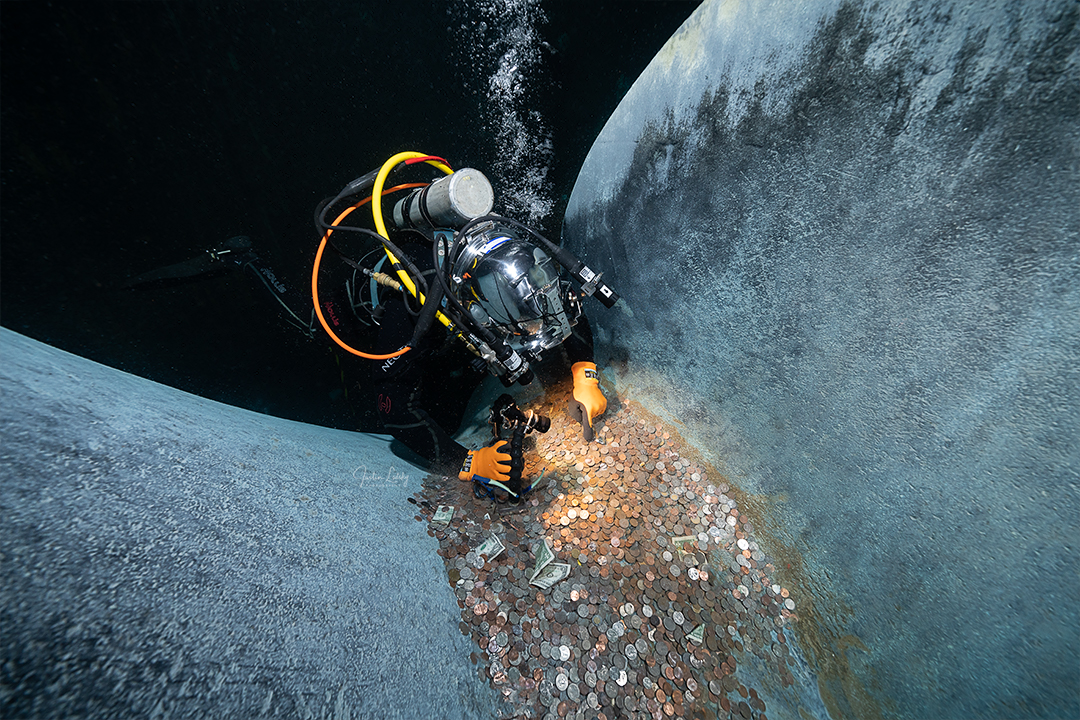
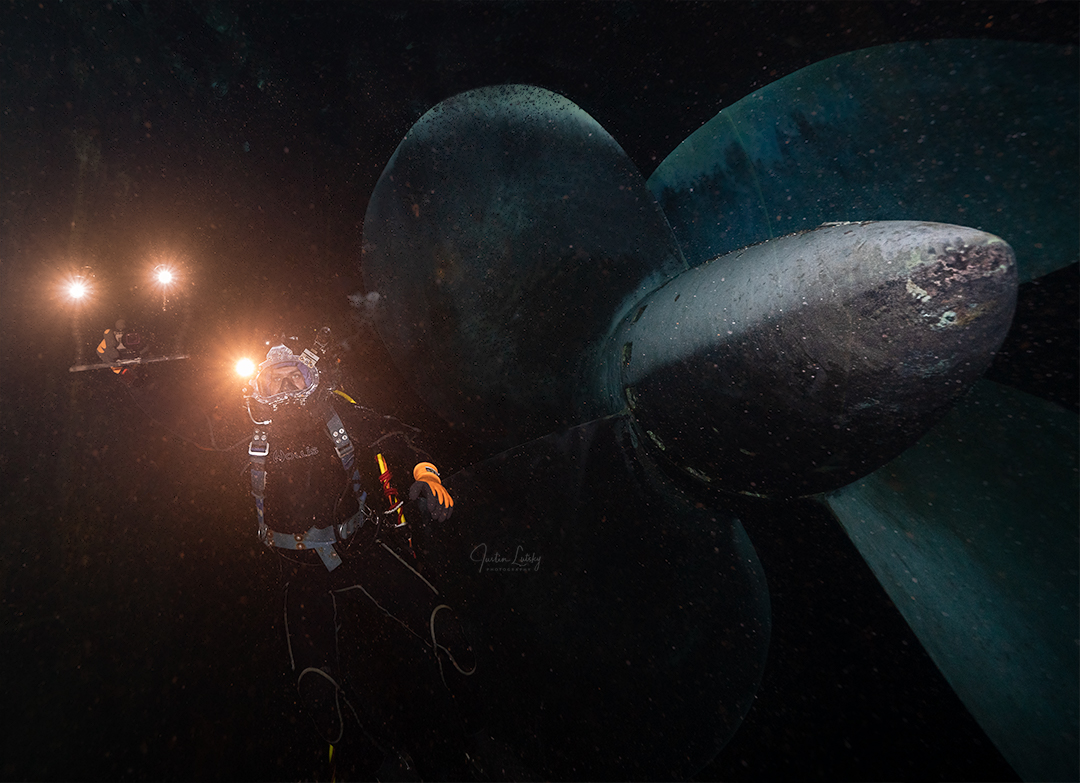
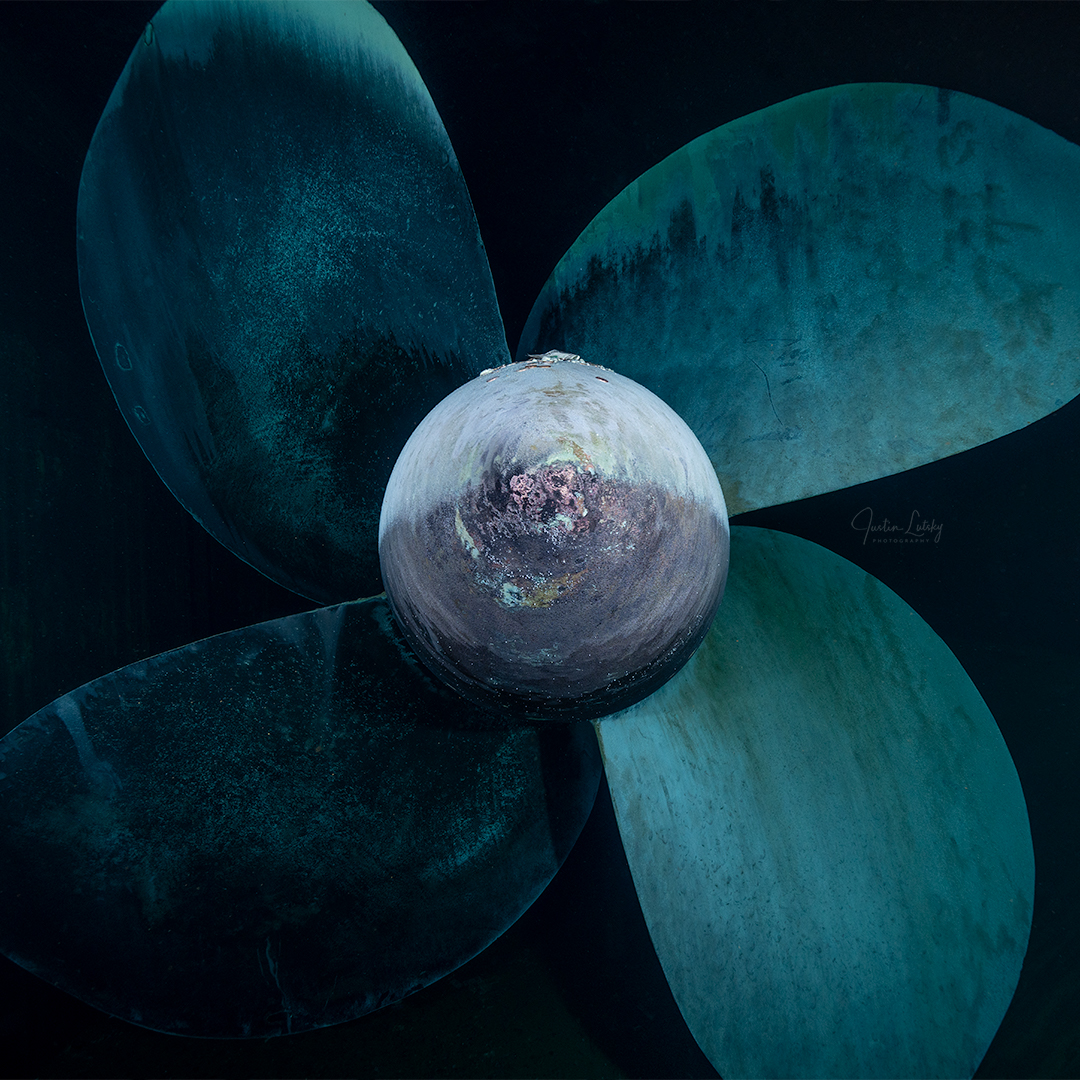
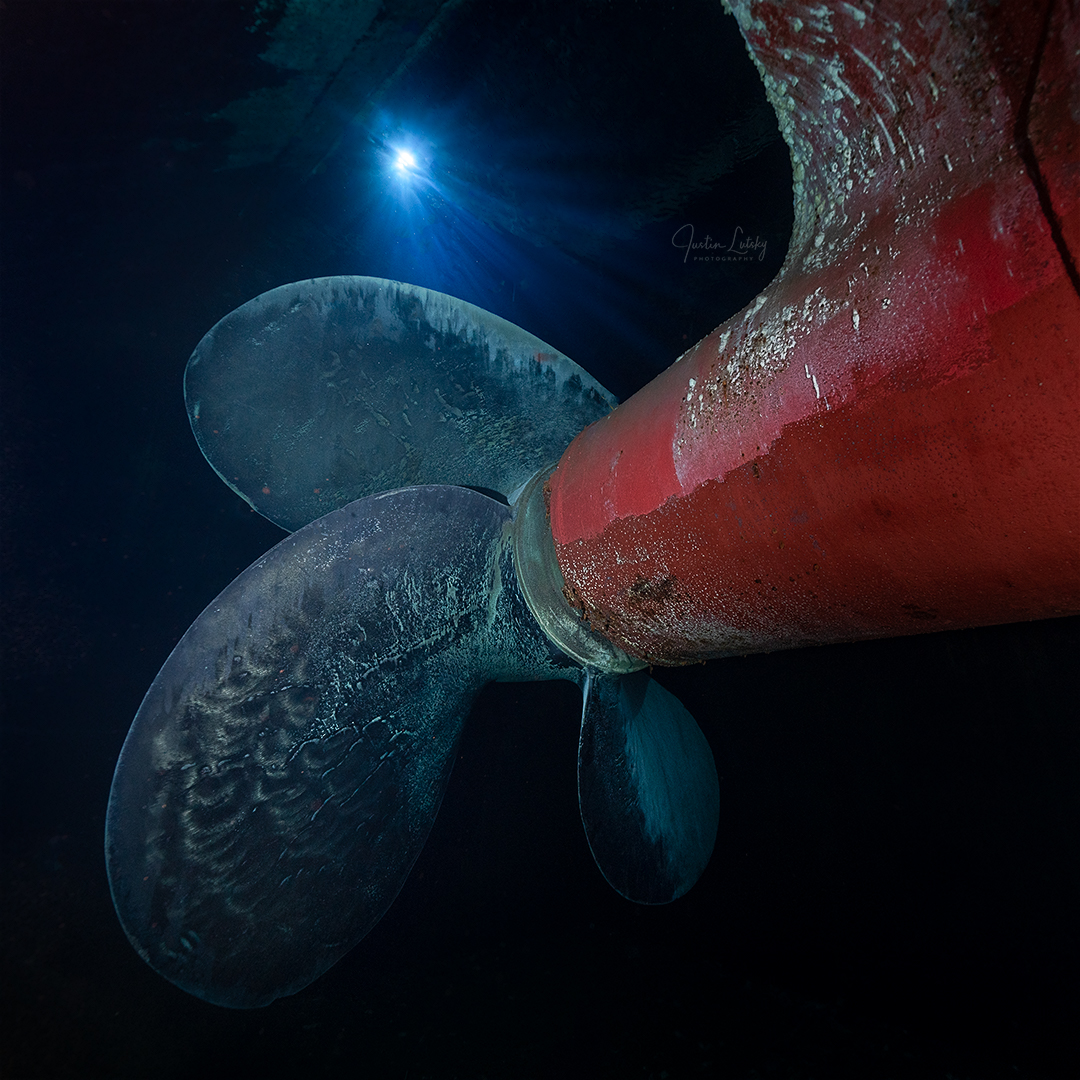
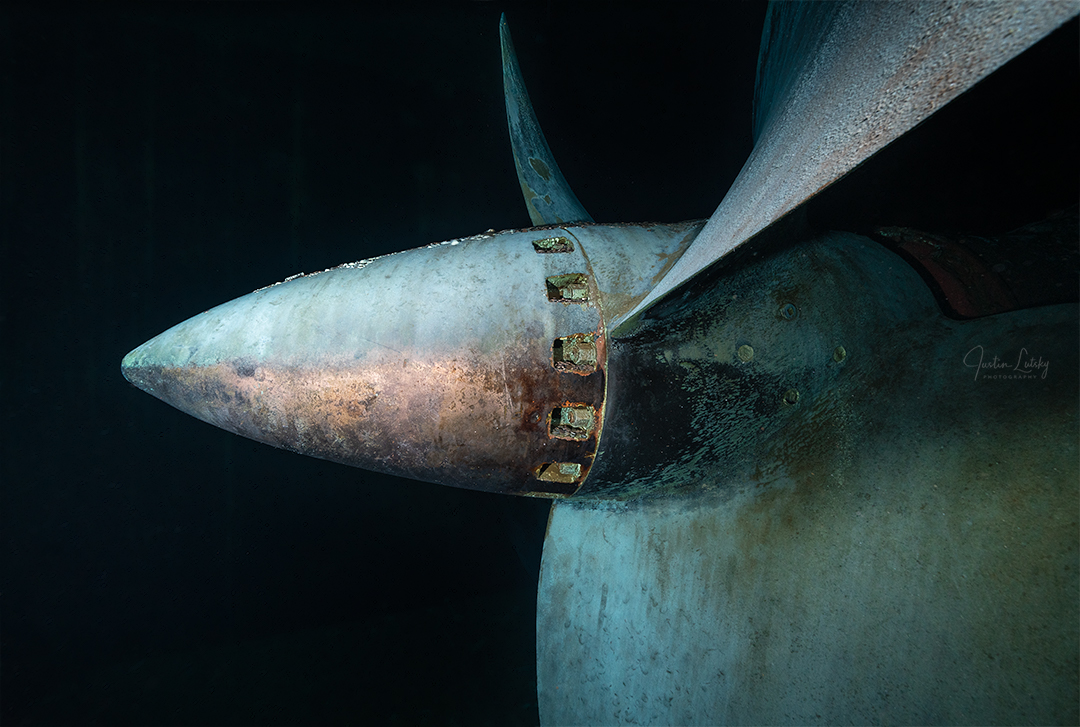
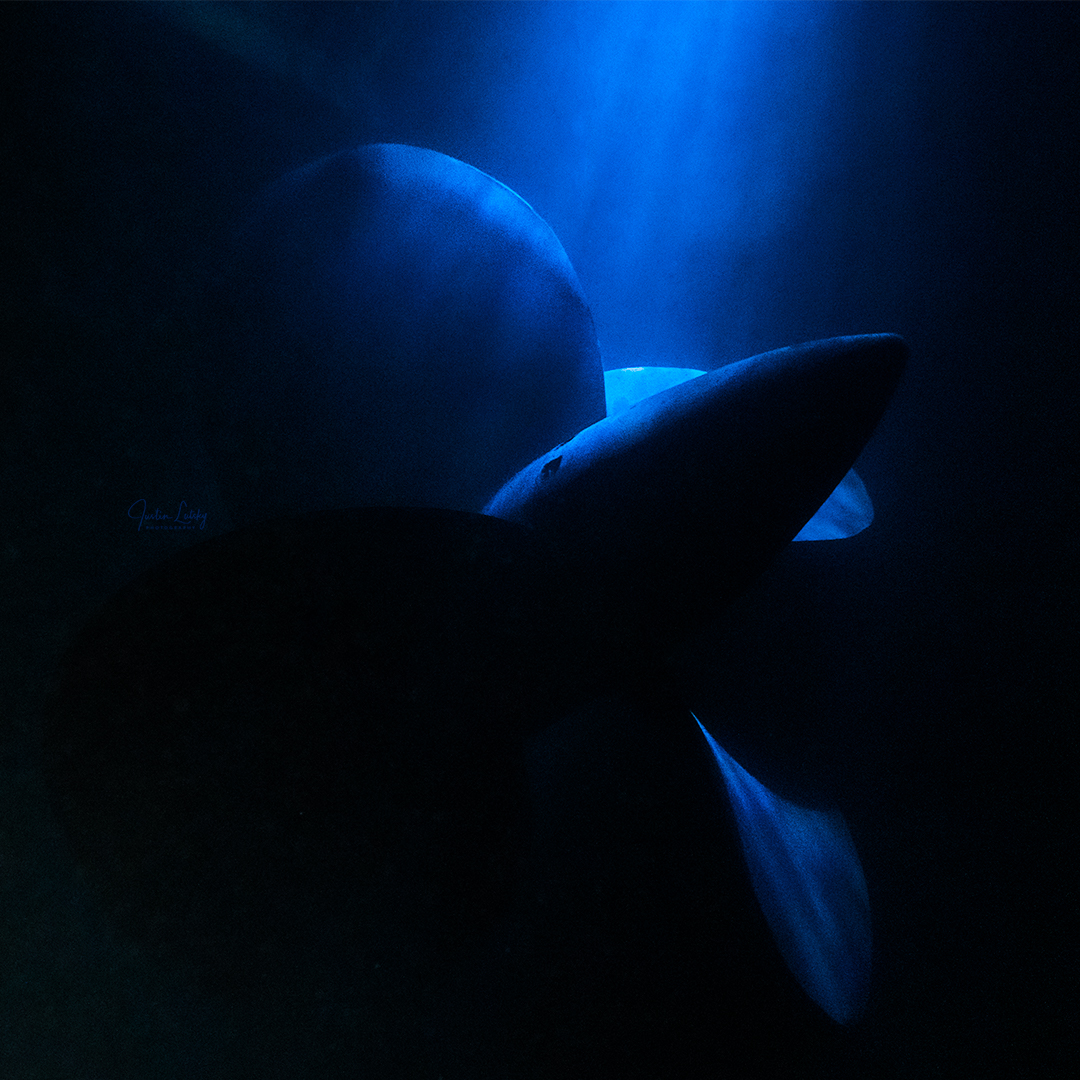
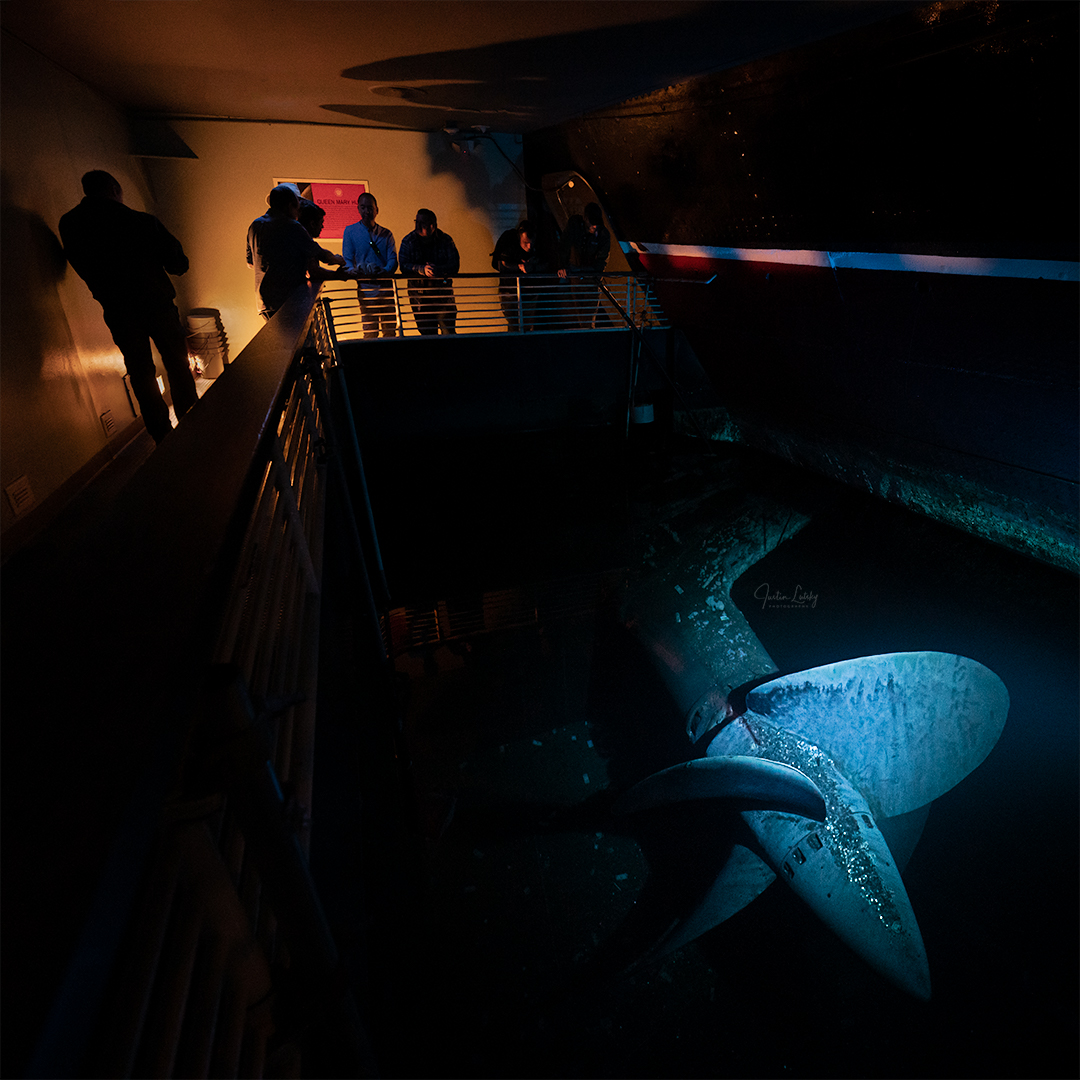
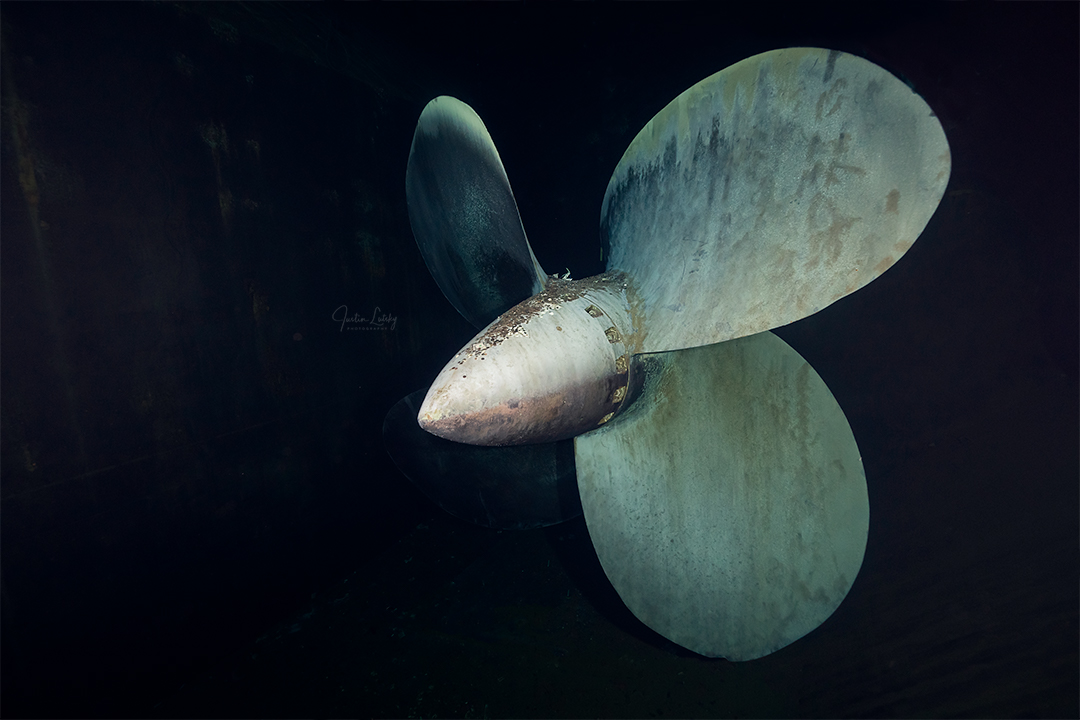
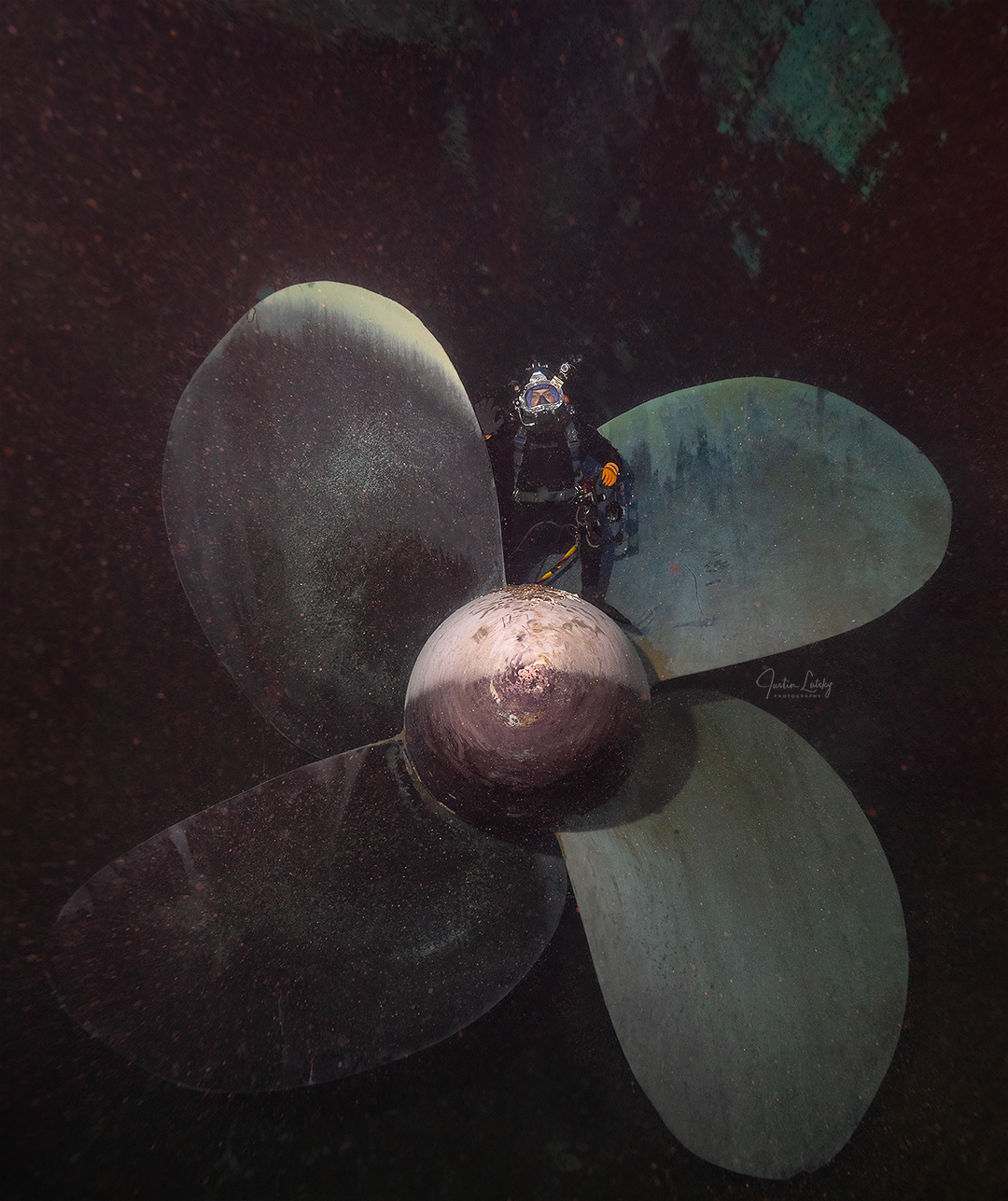
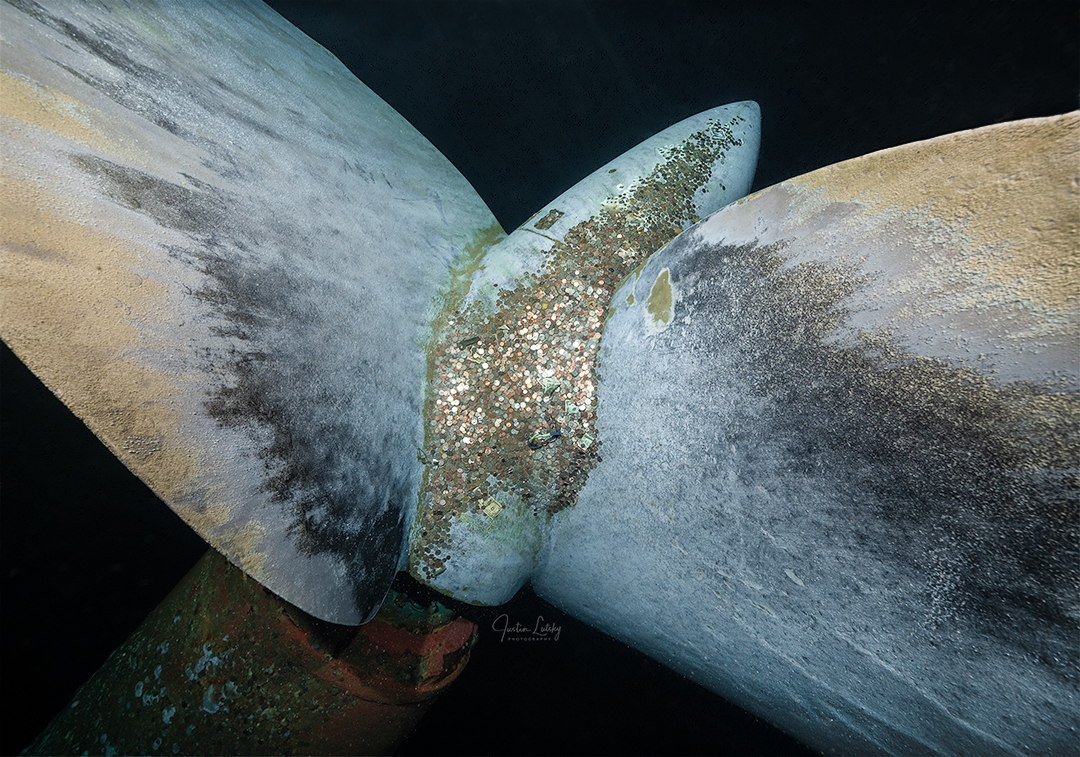
Most guests never see her below the waterline. One exception is the Propeller Observation Box: a watertight steel containment room built around one of the ship's original four bronze propellers, filled with freshwater, painted black, and lit dramatically to give visitors the sensation of peering straight down into open water. The propeller itself is 18.5 feet in diameter and weighs approximately 35 tons, a manganese-bronze casting that once turned at 200 RPM to push the liner across the Atlantic at more than 30 knots.
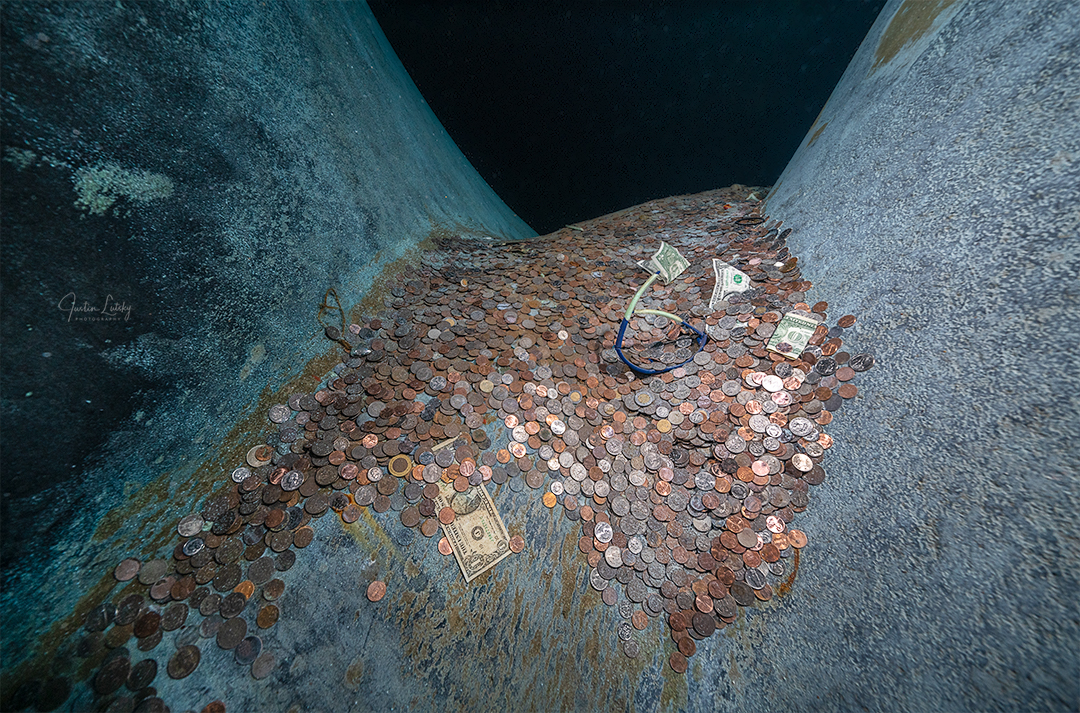
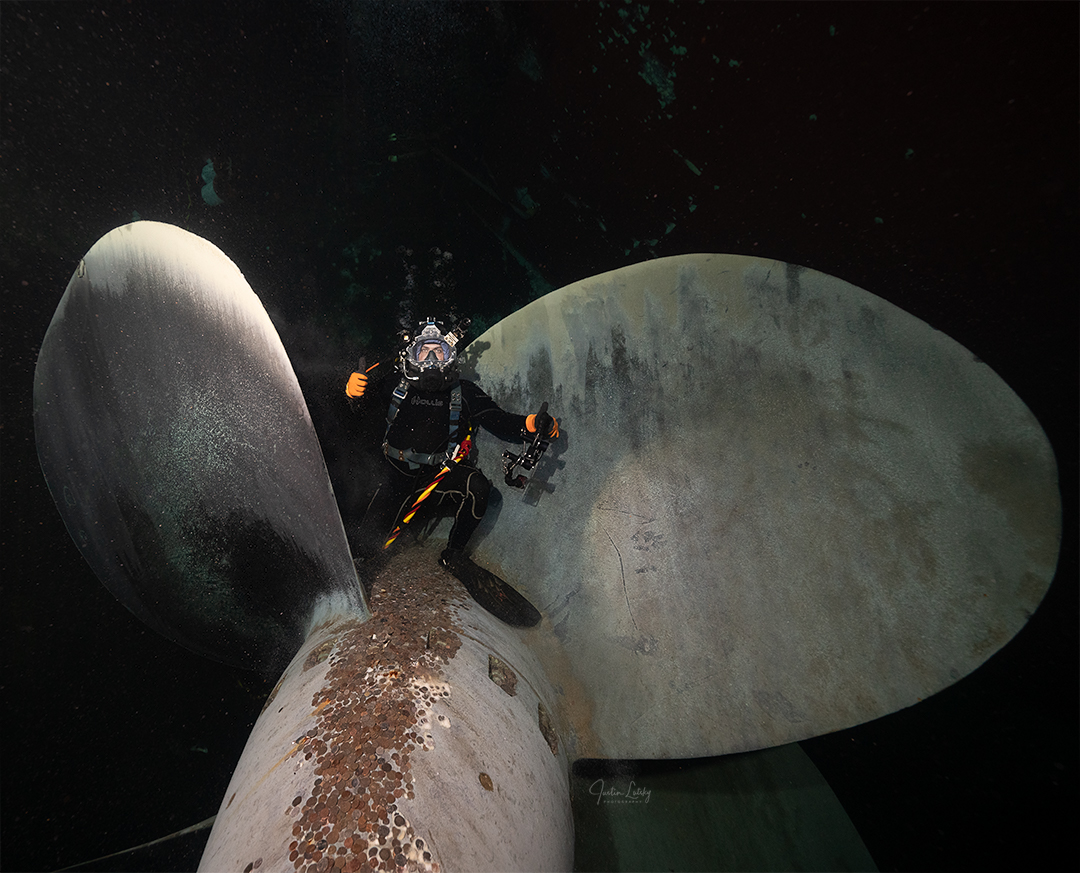
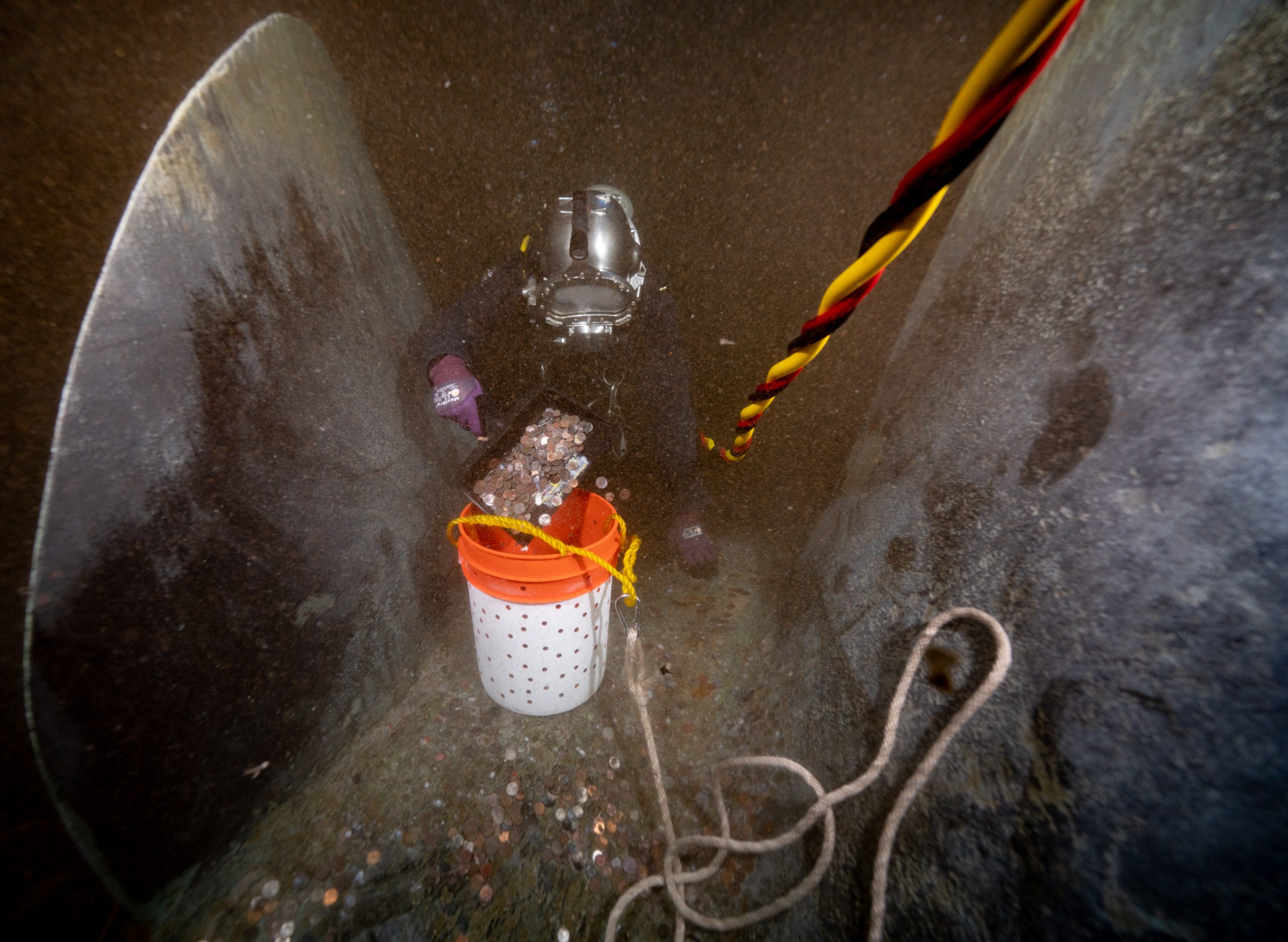
Over the decades, visitors have thrown coins into the observation room the way people toss change into a fountain. What began as a casual tradition accumulated into nearly two dumpsters of mixed-metal debris: copper pennies, silver coins, gold jewelry, steel tokens, all layered across the steel plate floor of the containment structure. It looked like a wishing well. Beneath the surface, it was quietly corroding the room that keeps the ocean out.
Myers Marine Division was brought in to fix that.
When Coins and Steel Share the Same Water
The corrosion problem inside the Propeller Observation Box is a straightforward application of galvanic principles operating in an unusual setting. The bronze propeller is a copper alloy, cathodic and relatively noble on the galvanic series. The containment structure surrounding it is carbon steel, anodic and more reactive. When those two metals are electrically connected in any electrolyte, a galvanic cell forms that preferentially corrodes the steel.
Freshwater is a weaker electrolyte than seawater. Lower ionic conductivity means slower galvanic current. But slower is not zero. With decades of accumulation, and with dozens of additional metal types completing galvanic couples at varying potentials, copper pennies, silver coins, nickel alloys, gold, the reaction had been running continuously since the Propeller Box first opened to visitors. Each coin introduced another dissimilar metal pairing. The more variety on the galvanic series, the more active the differential-metal corrosion across the accumulated mass.
The steel base plate, the structure that physically separates the Propeller Observation Box from the hull, had been exposed to that electrochemical environment for years without a meaningful inspection. Its condition was unknown. If galvanic progression had advanced far enough to compromise that plate, ocean water would find its way into the Queen Mary. The ship's management needed eyes on the steel, and they needed the debris field cleared first to get there.
Why a Small Contractor Got the Call
The Queen Mary approached multiple commercial dive companies about the project. The recovered coins, bills, and jewelry would be donated entirely to Ronald McDonald House Charities and St. Jude Children's Research Hospital. The terms were clear: extract the debris, survey the structure, and turn everything over to the charities.
Several firms quoted $20,000 per day for the work. None of them were willing to donate the proceeds.
Myers Marine took a different position. We quoted the job at no charge and committed to delivering 100 percent of the recovered value directly to the two charities. We were the smaller contractor in the conversation. We were also the only one willing to make the math work for the cause. That is how we got the job.
It is worth saying plainly: this is not how most contracts are won. Myers Marine did not have the largest fleet or the longest roster at the time. What we had was a decision about what this particular job meant, and a willingness to back that decision with our labor.
Nine Hours in the Propeller Box
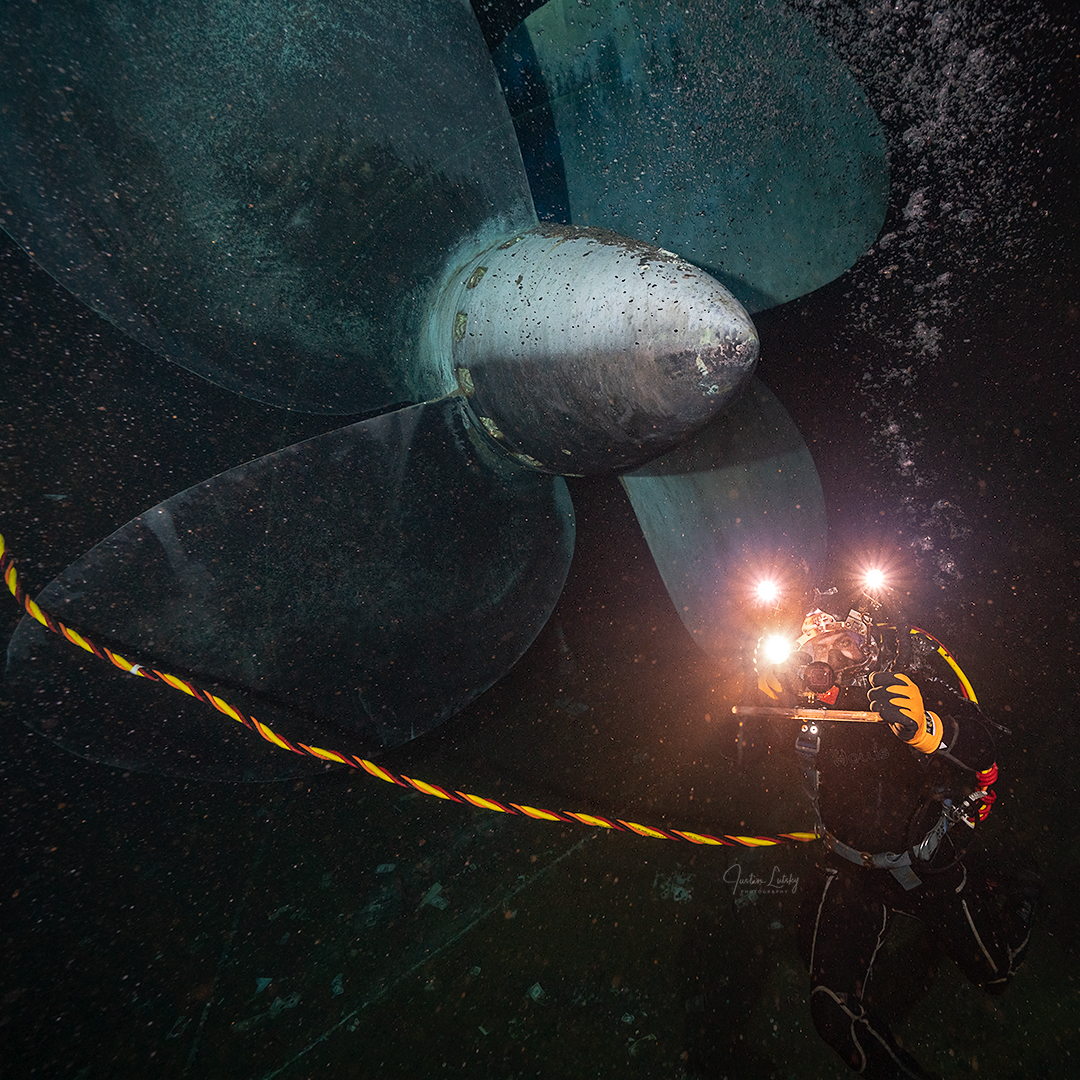
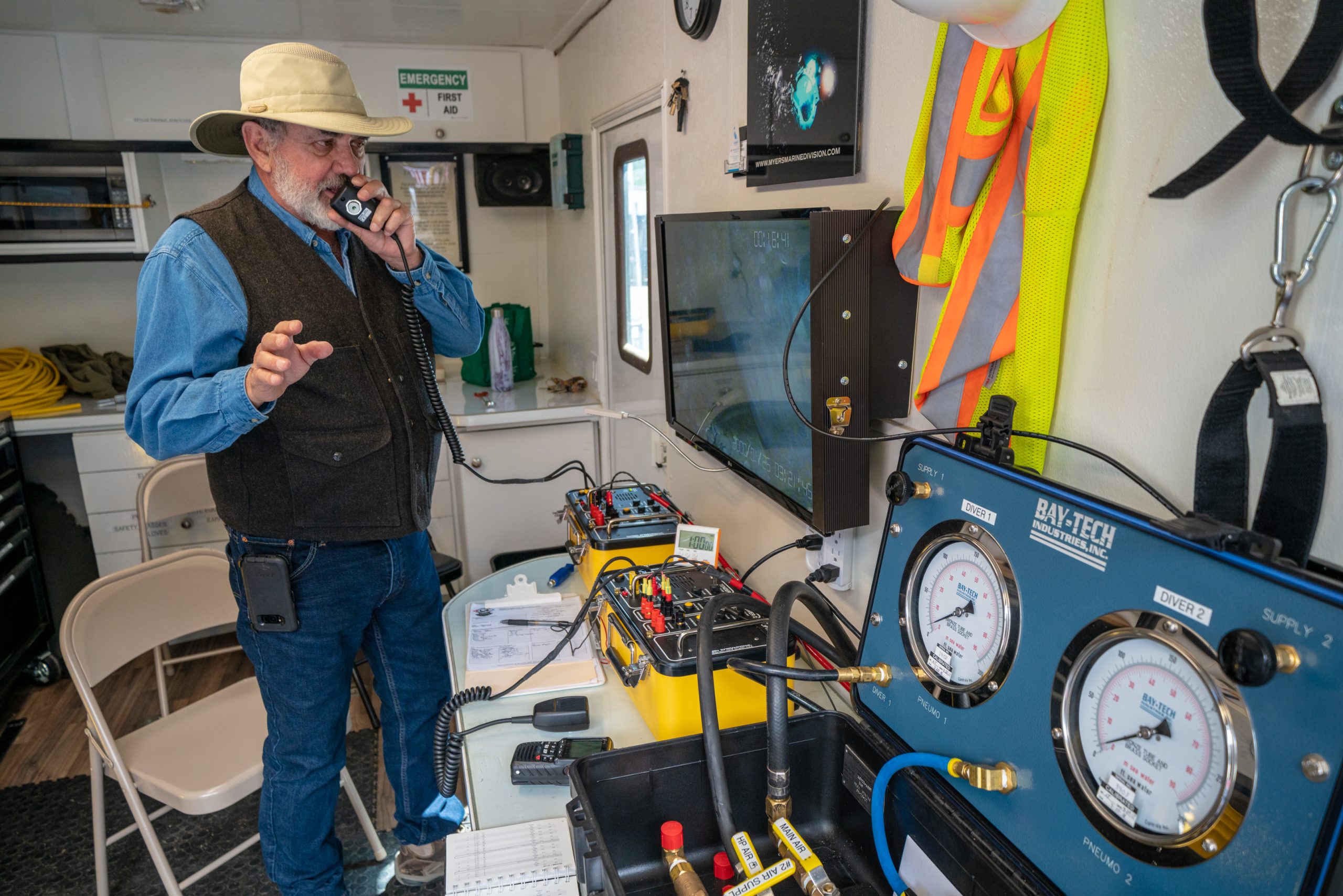
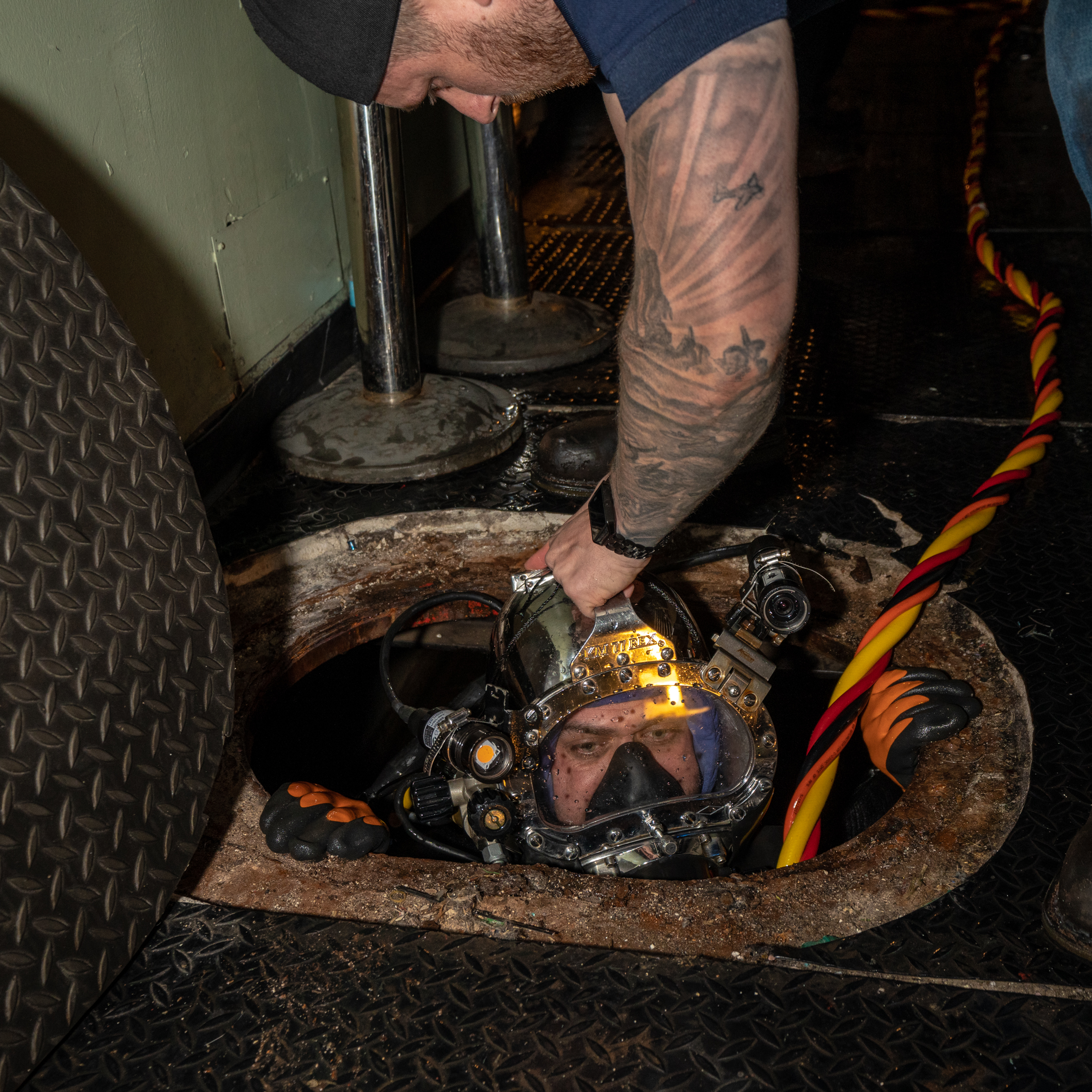
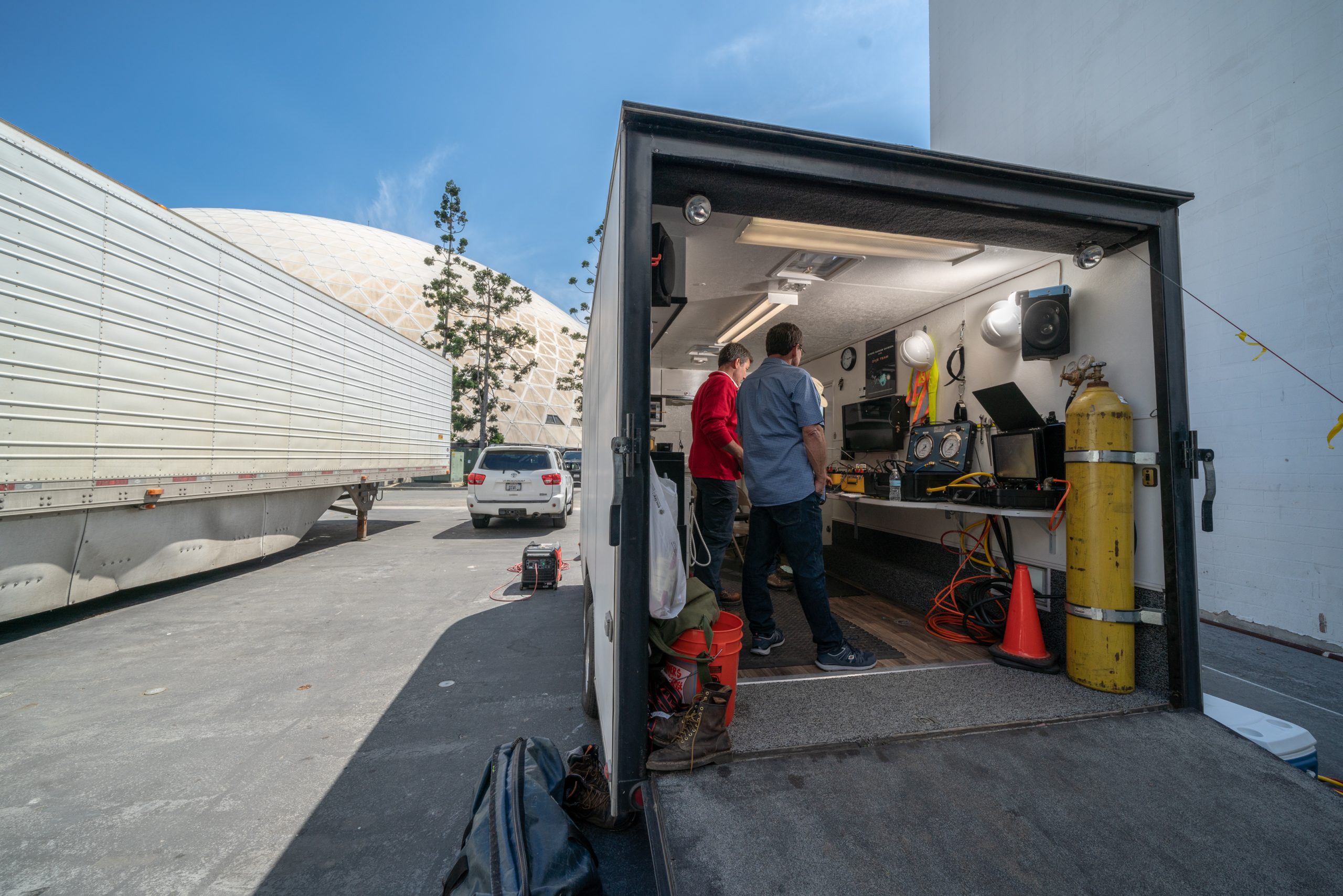
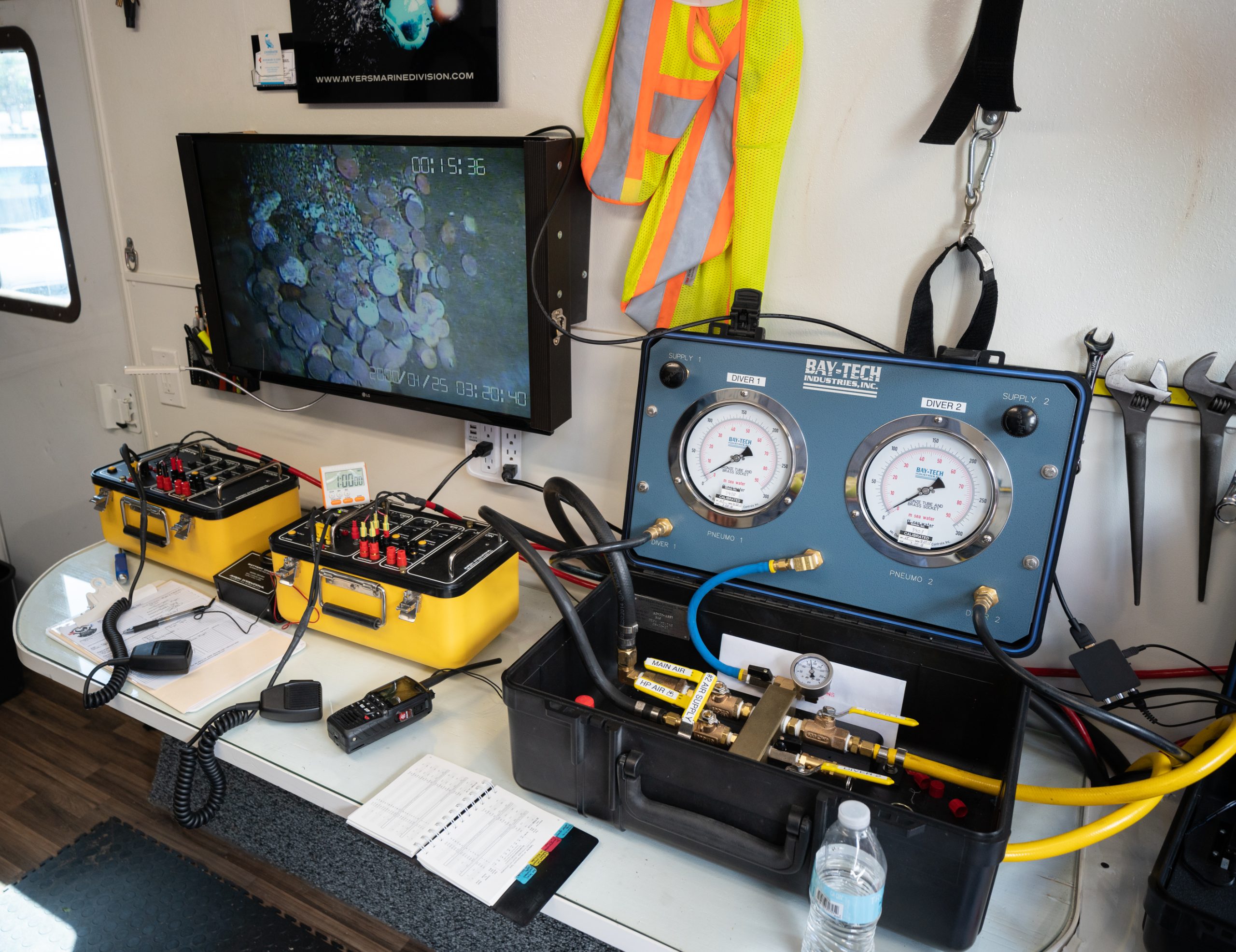
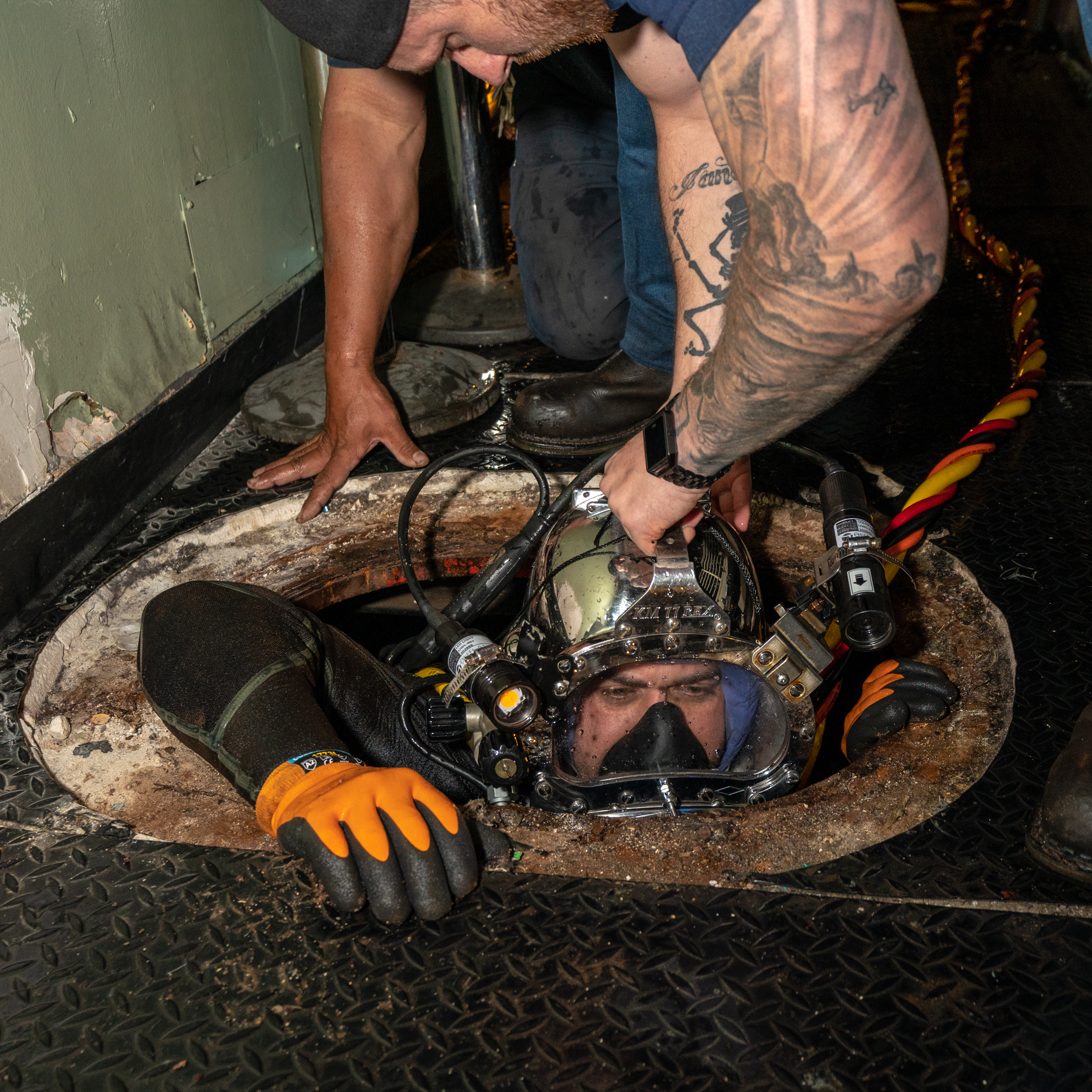
Myers Marine deployed a mobile dive center, a fully equipped trailer staging surface-supplied air systems, to the dock alongside the Queen Mary. From there, surface-supply airlines were routed aboard the ship and threaded down through the vessel's interior into the Propeller Observation Box. Topside communications ran on high-frequency marine radios, maintaining continuous contact between the dive supervisor and the divers working below.
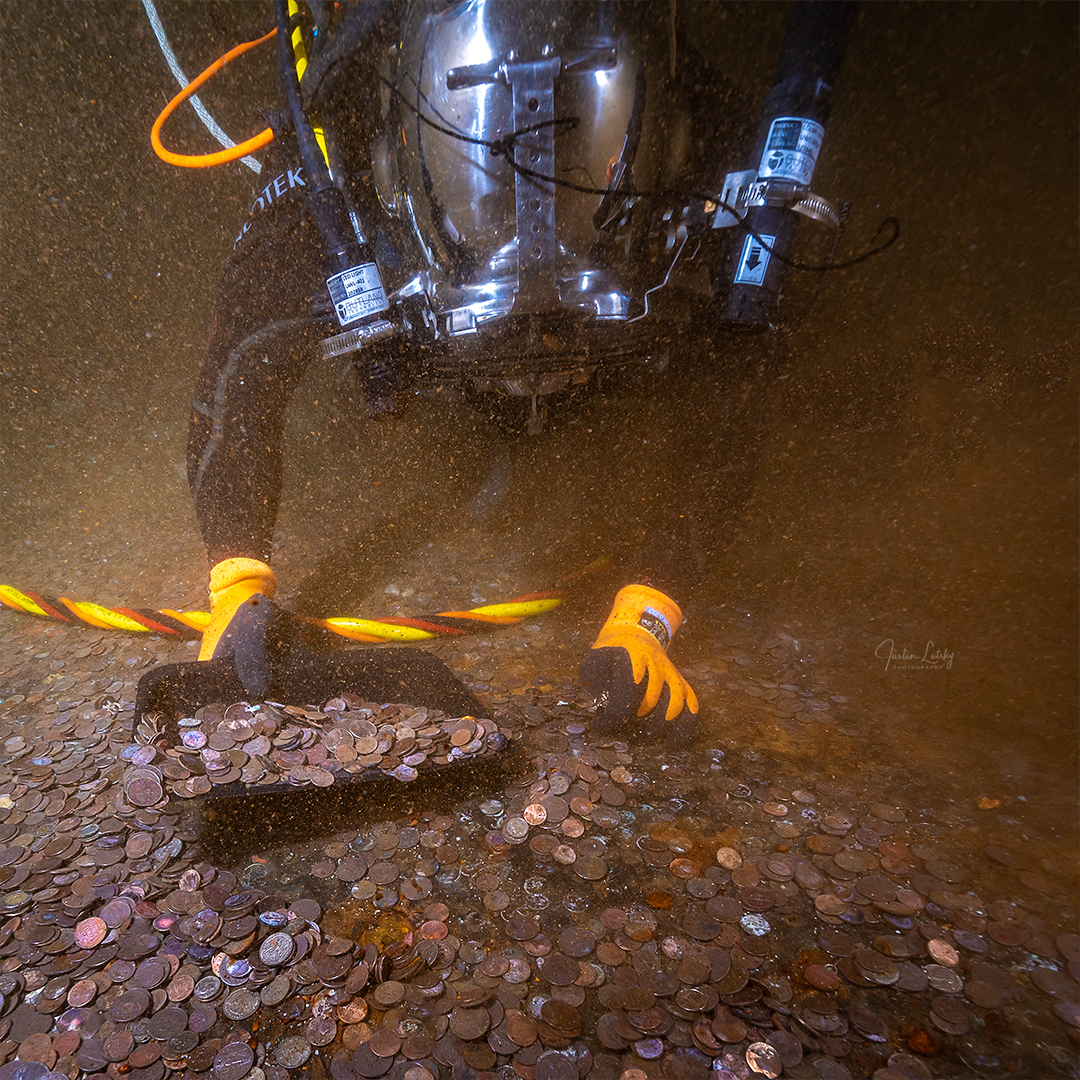
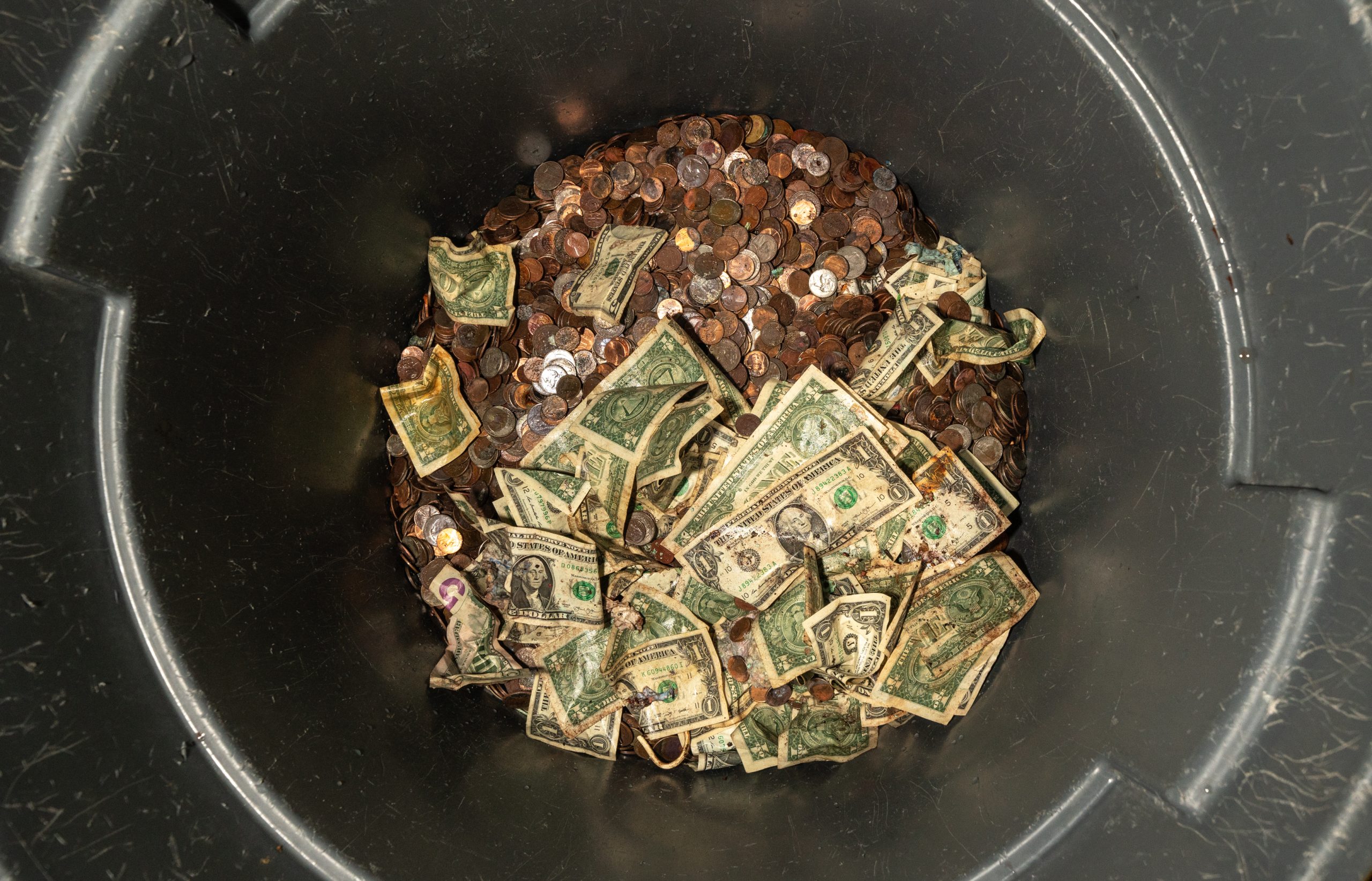
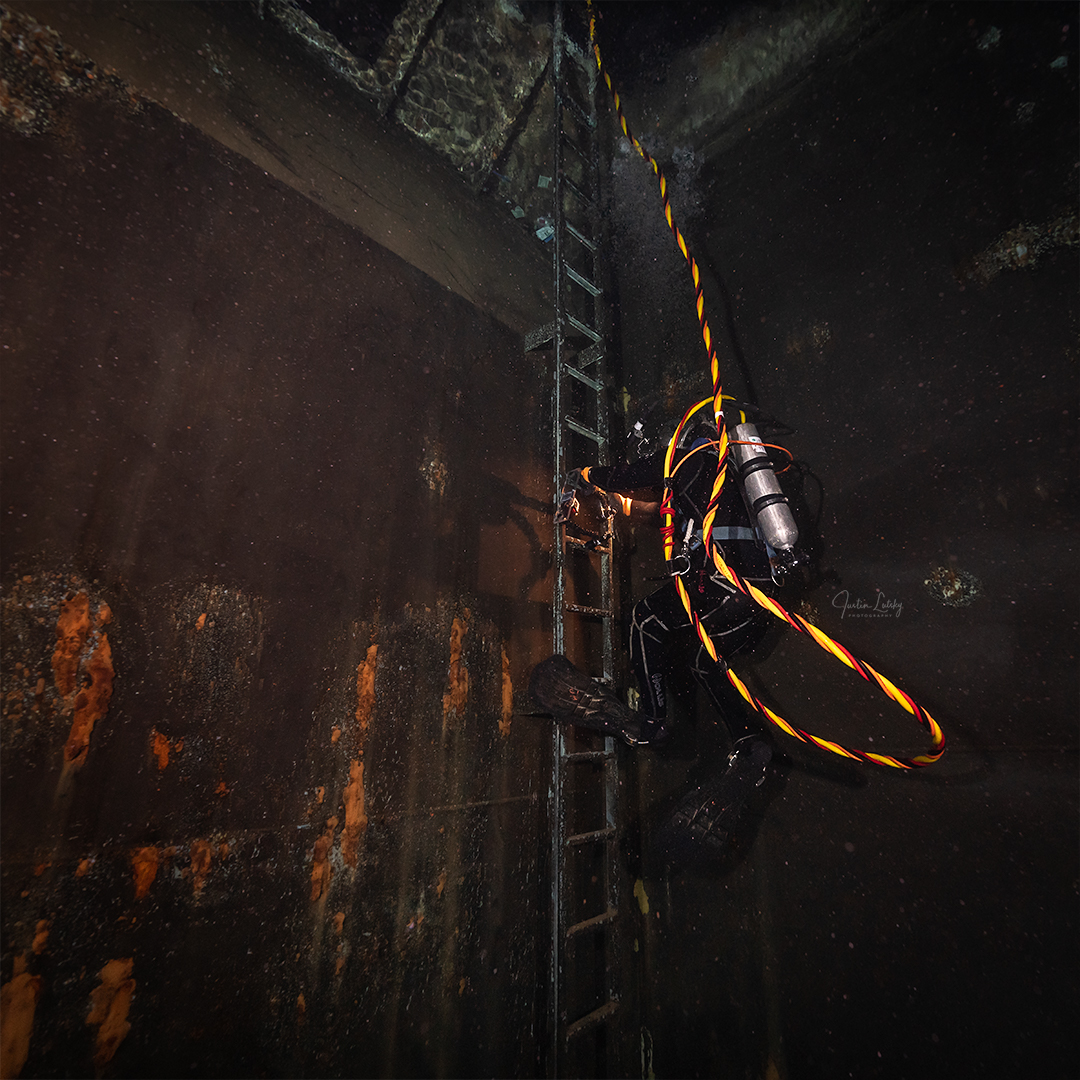
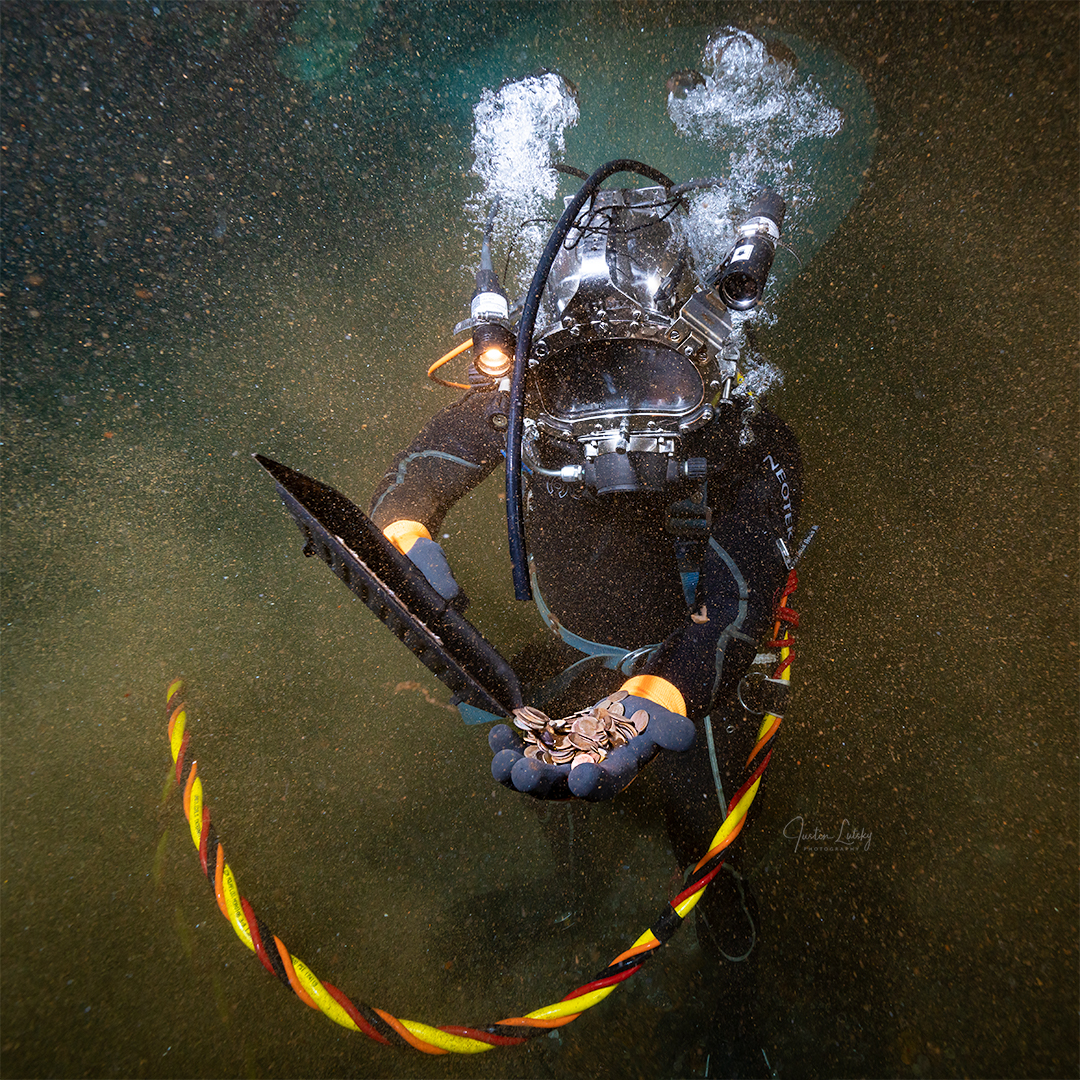
Three divers entered the water simultaneously, each outfitted in Kirby Morgan helmets on full surface-supplied air. They worked for nine consecutive hours, manually shoveling mixed-metal debris from the box floor into 5-gallon buckets. At capacity, those buckets were nearly too heavy to move. The extraction was methodical and physically demanding in the way that most effective commercial diving is: not dramatic, but relentless.
A fourth team member, professional underwater photographer Justin Lutsky of Submerge Underwater, documented the entire operation using high-definition underwater video and photography. The freshwater environment inside the Propeller Box, isolated from ocean particulate and sediment, provided exceptional visibility, conditions rarely available in open-water commercial work. Lutsky captured the full extraction sequence from mobilization through final survey, giving the Queen Mary's management a complete underwater imaging and documentation record of the operation.
By the time the team surfaced, they had recovered nearly two dumpsters of mixed-metal debris with an estimated value of $50,000 to $80,000. The full amount was turned over to Ronald McDonald House Charities and St. Jude Children's Research Hospital.
Steel Survey and What the Cleanup Revealed
With the floor of the Propeller Observation Box fully cleared, the steel base plate was visible for the first time in years. Myers Marine conducted a systematic visual corrosion survey of the exposed structure, documented in real time through Lutsky's HD photography.
The findings: light to moderate corrosion consistent with extended differential-metal galvanic activity. The steel had been acting as the anodic partner in the galvanic couples formed with the bronze propeller and the accumulated coin mass. The corrosion was not structurally catastrophic. It was, however, measurable and ongoing. Without the debris field removed and the condition documented, the progression would have continued undetected.
The full documentation package, covering both the extraction and the structural survey, was delivered to the Queen Mary for use in facilities planning. The corrosion baseline now gives management the data needed to evaluate cathodic protection measures, sacrificial anode placement, or protective coatings on the steel plate going forward.
Preserving a vessel like the Queen Mary is not a single event. It is a maintenance schedule built on accurate, current information about what is happening below the waterline. That structural survey is part of that record now, and the propeller room that tens of thousands of visitors walk through each year is in better shape because of what nine hours of commercial diving work revealed.
For marine project owners, vessel operators, and facilities managers dealing with enclosed underwater structures, mixed-metal accumulation, or differential-metal corrosion in non-standard environments, contact Myers Marine Division to discuss your project scope.