Keeping Hyperion Online: Confined-Space Digester Diving at LA's Largest Treatment Plant
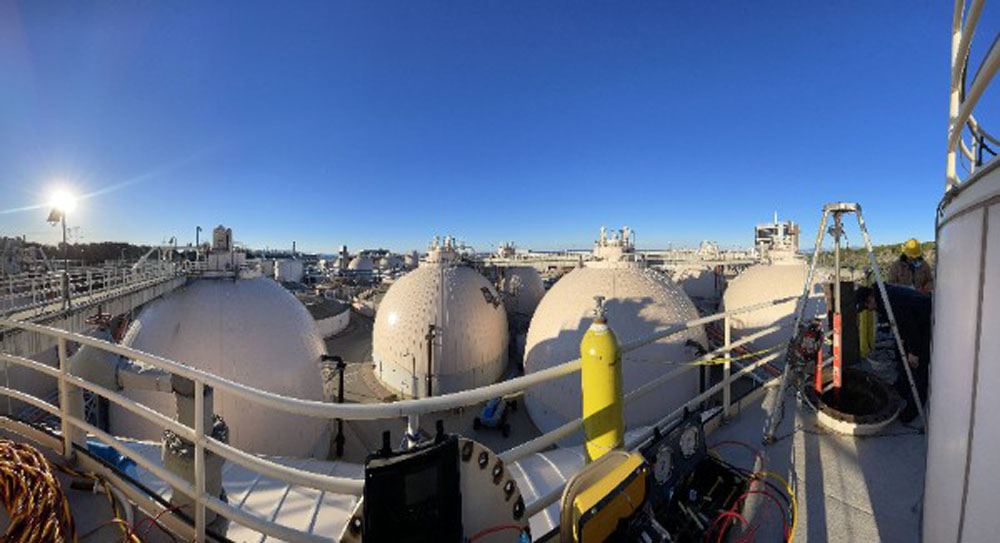
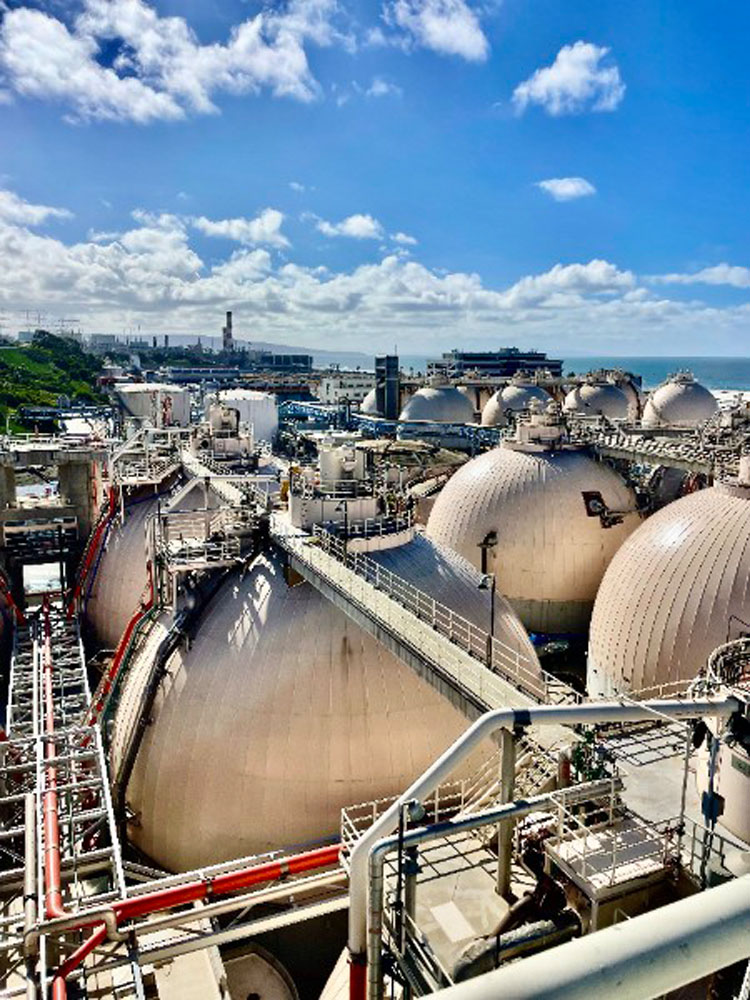
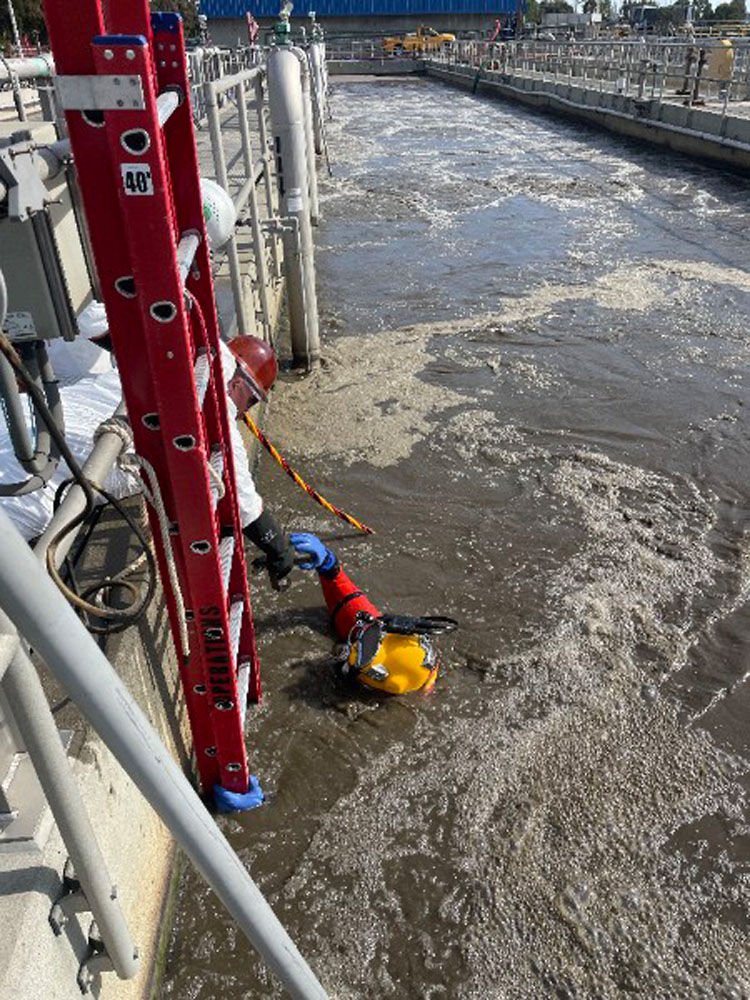
When a wastewater treatment plant the size of the Hyperion Water Reclamation Plant loses a digester, the clock starts running immediately. Hyperion, operated by LA Sanitation and Environment (LASAN) on Vista Del Mar in Playa Del Rey next to LAX, processes hundreds of millions of gallons of wastewater a day for millions of Angelenos. Deep inside that system sit massive egg-shaped anaerobic digesters, sealed domes where treated solids are broken down before disposal. Each one depends on a center-mounted mixing shaft that never stops turning. When that shaft starts to wobble, the plant has to shut the digester down, and shutdowns are never simple. This is the point where Myers Marine gets the call. Our divers go inside the digester, in the sludge, to fix what nobody else is trained or equipped to touch.
Inside the Digester: What a 110-Foot Mixer Actually Does
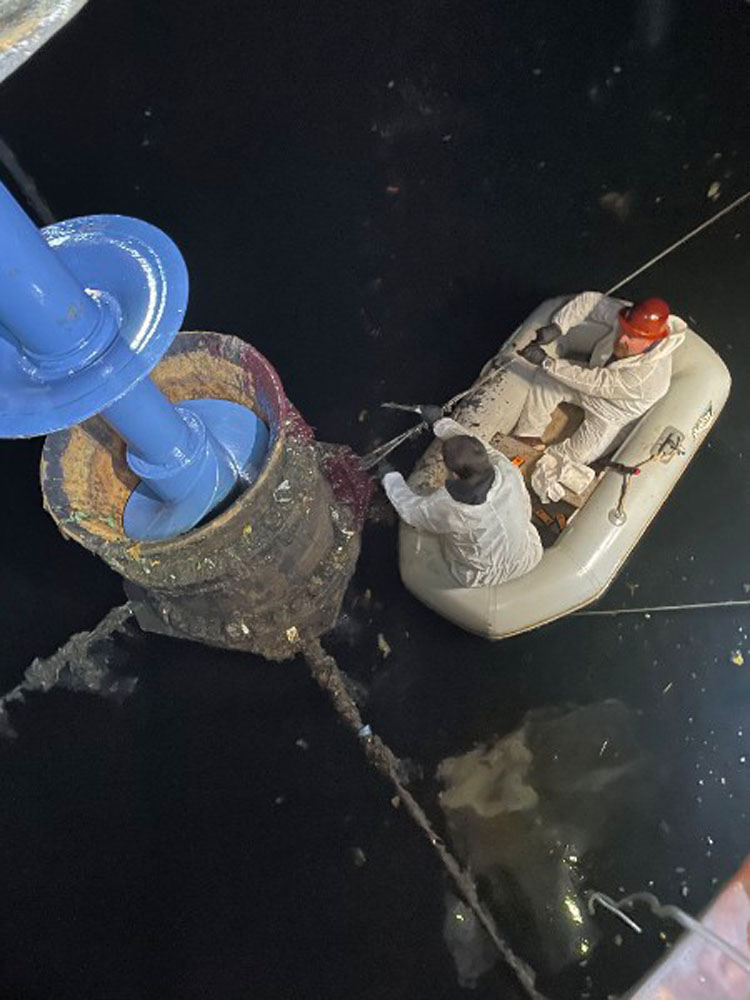
A digester dome isn't a passive holding tank. Inside it, a mixing shaft roughly 110 feet tall runs down the center of the vessel, constantly turning to keep emulsified, chemically treated solids in suspension so the digestion process works evenly throughout the tank. That shaft is held centered by a retainer ring at the top, secured with four steel cables.
Vibration is constant in a system running around the clock, and over time it does what vibration always does to steel cable: it stretches it. As the cables loosen, the mixing shaft loses its centering and starts to wobble. Left alone, a wobbling shaft can damage the tank itself, and the plant has no choice but to take the digester offline. That is a serious problem. A facility like Hyperion can only afford to have two or three digesters down at once before the rest of the system starts to strain under the load it's absorbing from the units that are still running.
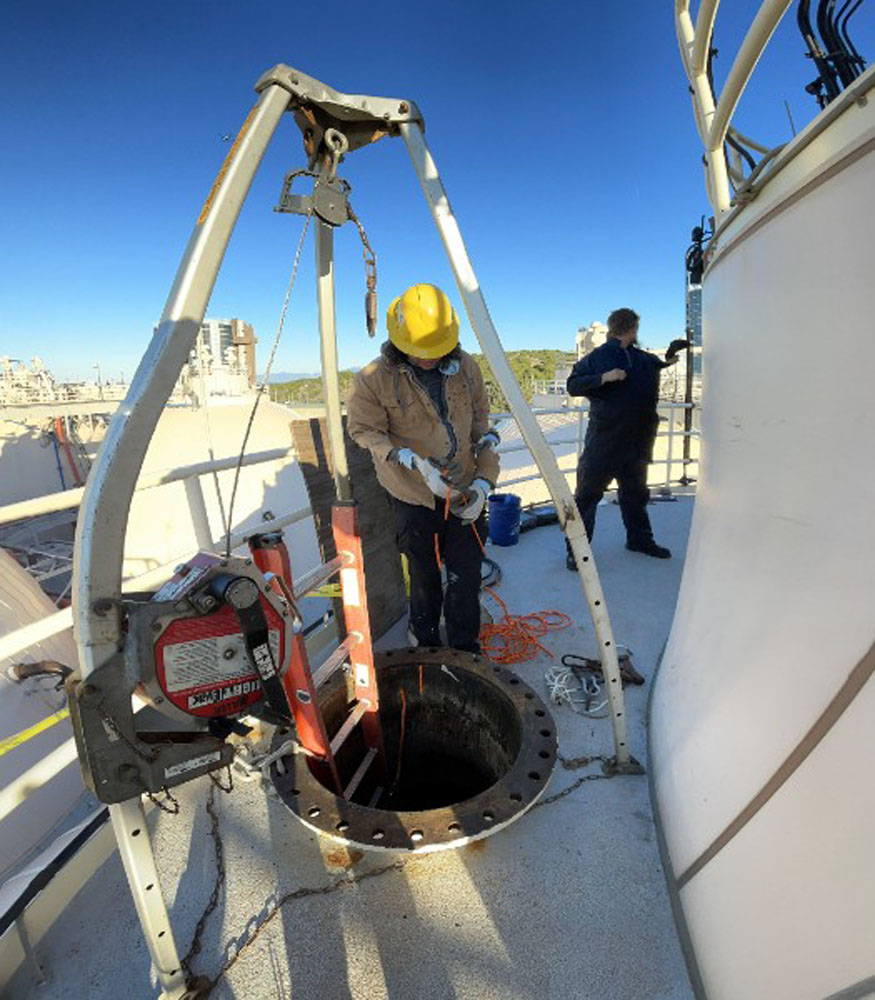
Recentering that shaft and re-tensioning the cables isn't something that can be done from the deck. Someone has to go into the dome itself, in the sludge, and do it by hand.
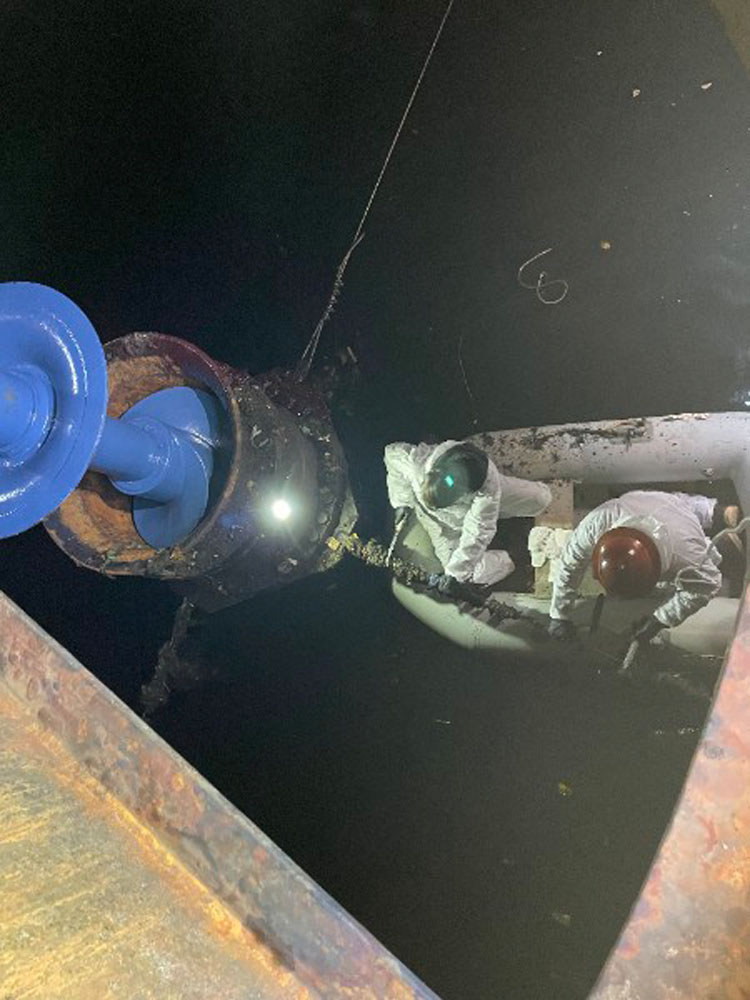
The sludge itself is part of what makes this different from any other dive Myers Marine runs. It's emulsified and chemically treated solids, at zero visibility, with an odor topside crews describe as unlike anything else on a job site. There's no current to fight and no wreckage on the bottom, but there's also nothing to see, nothing to orient against, and a shaft the length of an eleven-story building turning somewhere nearby in the dark.
Gearing Up for a Dive Unlike Anything Else Myers Does
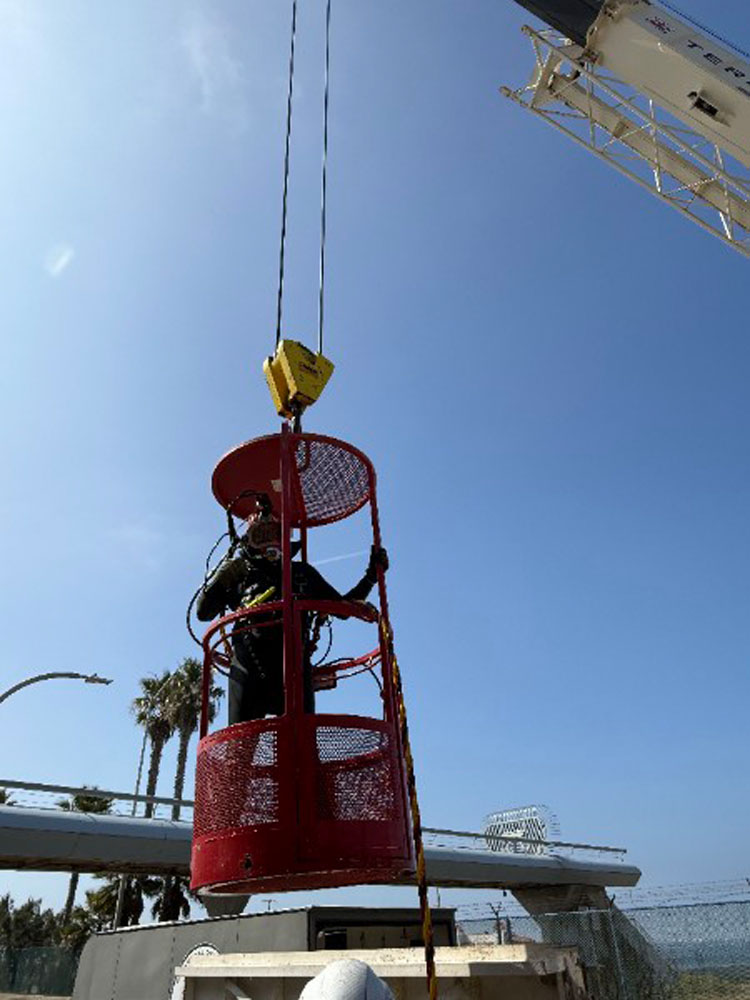
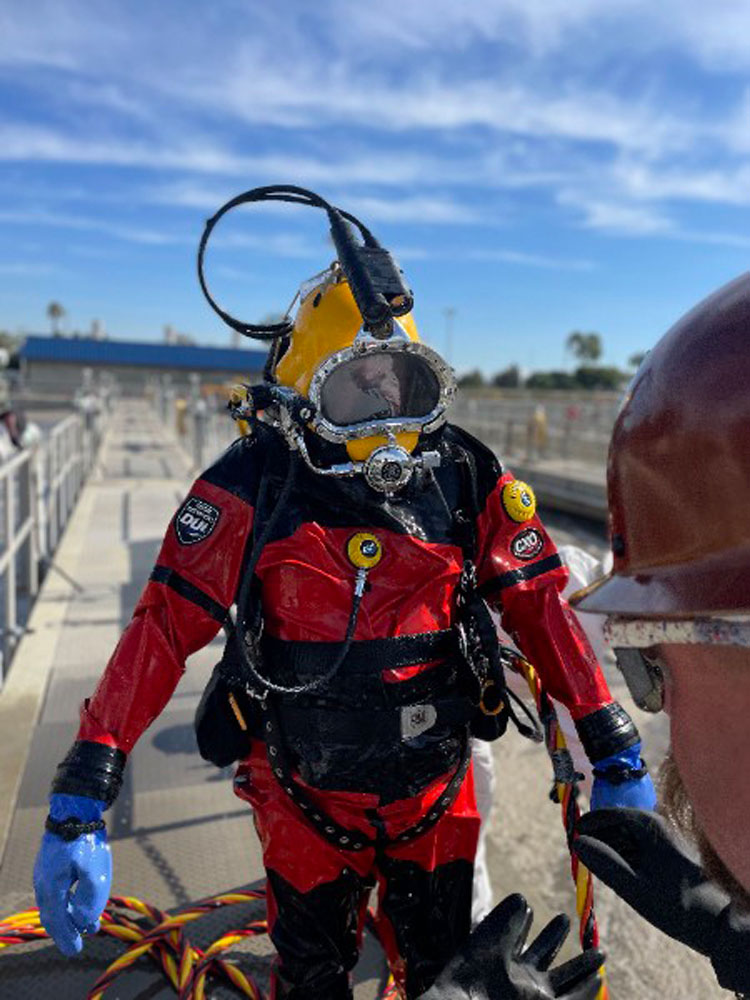
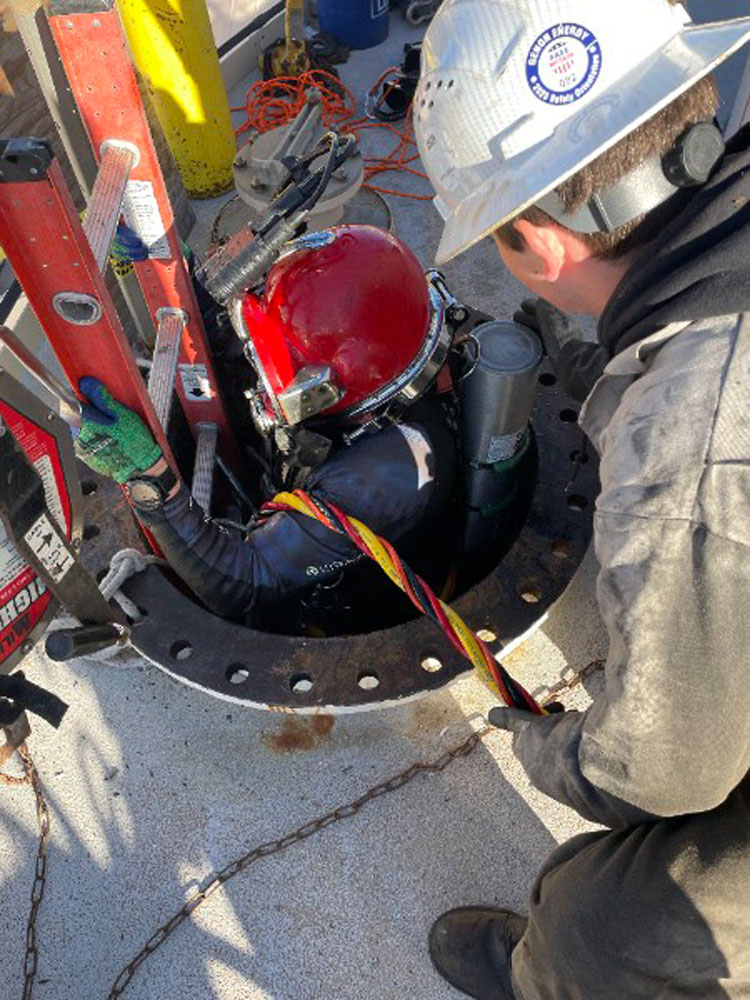
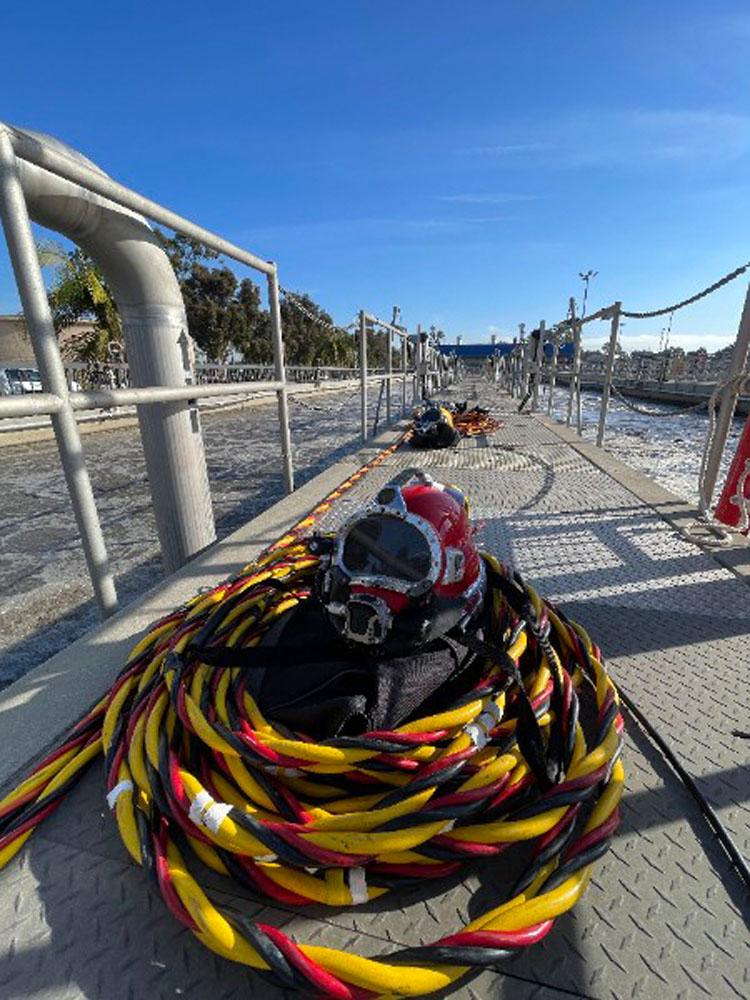
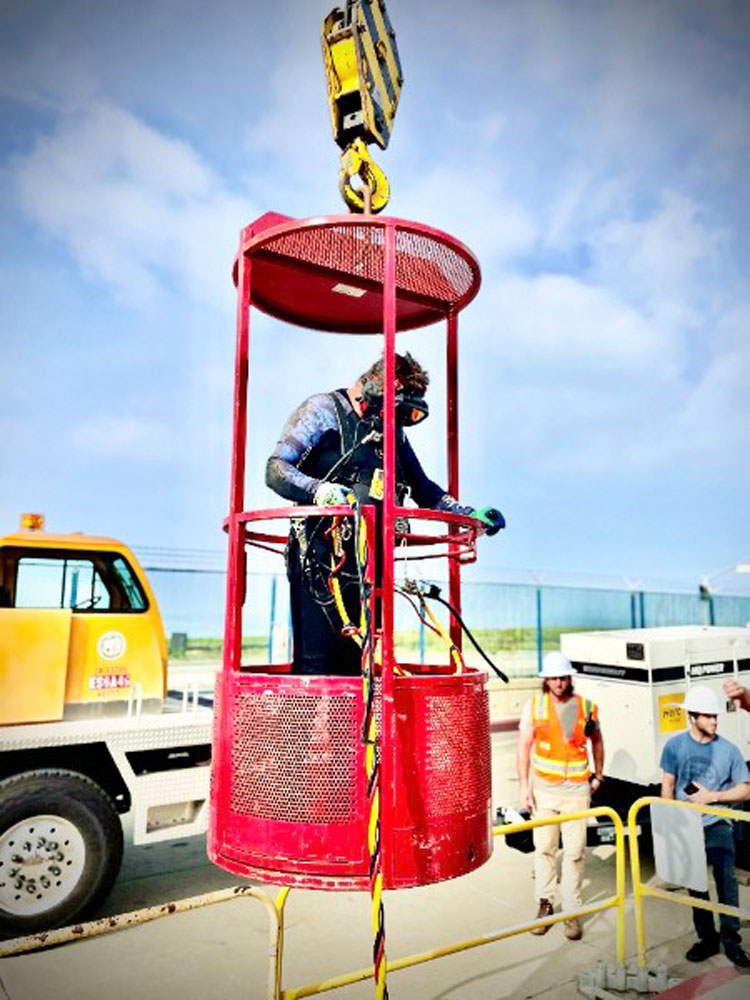
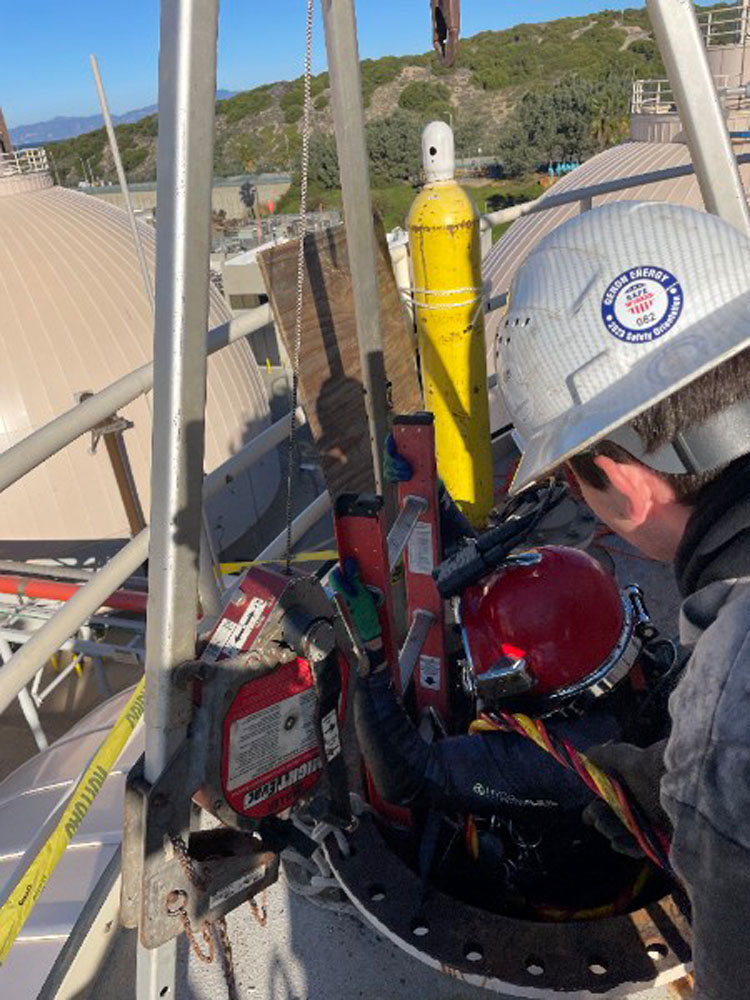
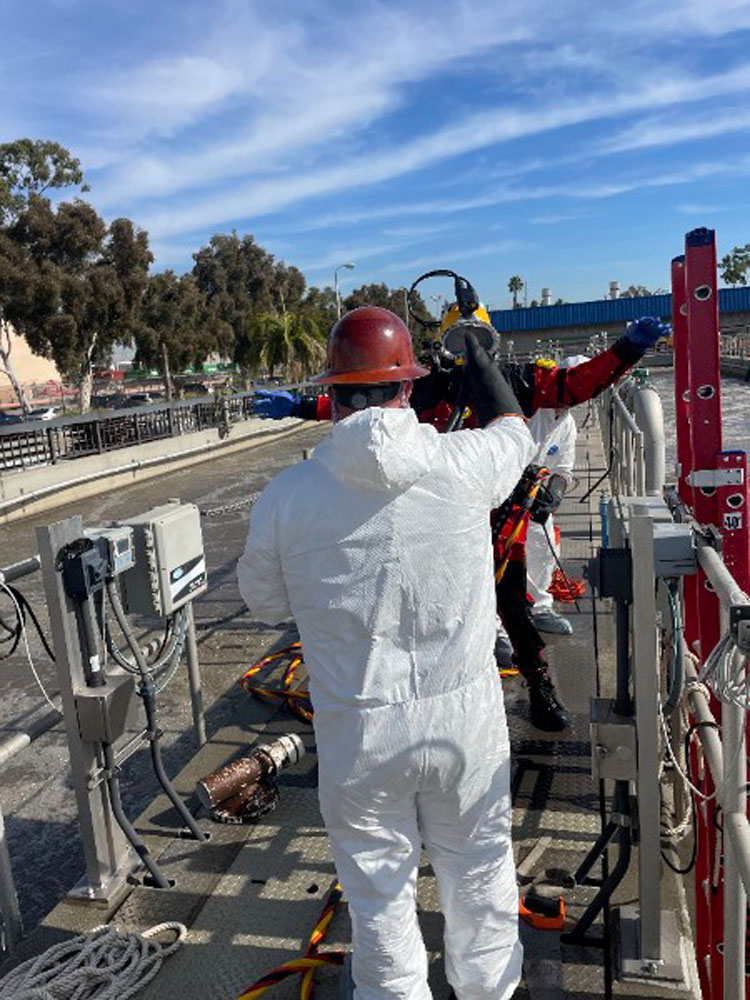
A digester dive doesn't run on the standard commercial diving kit. Every piece of equipment that goes in the water has to be intrinsically safe, meaning nothing on the diver or the support gear can generate a spark inside an enclosed space that's producing digester gas. That rules out compressor-fed air entirely. Divers breathe from high-pressure air bottles instead, and every diver wears a fully enclosed, trilaminate dry suit so there is zero skin exposure to the contents of the tank.
Once inside, the work itself is mechanical and physical at the same time. Divers tighten the four retainer cables and recenter the mixing shaft by feel, in an environment with no visibility and no room for a wrong move. Those same cables collect debris over years of continuous operation, and it isn't unusual to find thousands of pounds of hair and stringy material tangled around them, dragging the cable down and adding to the load that eventually leads to a wobble. Clearing that means cutting it free by hand with dive knives before the cable can even be re-tensioned properly.
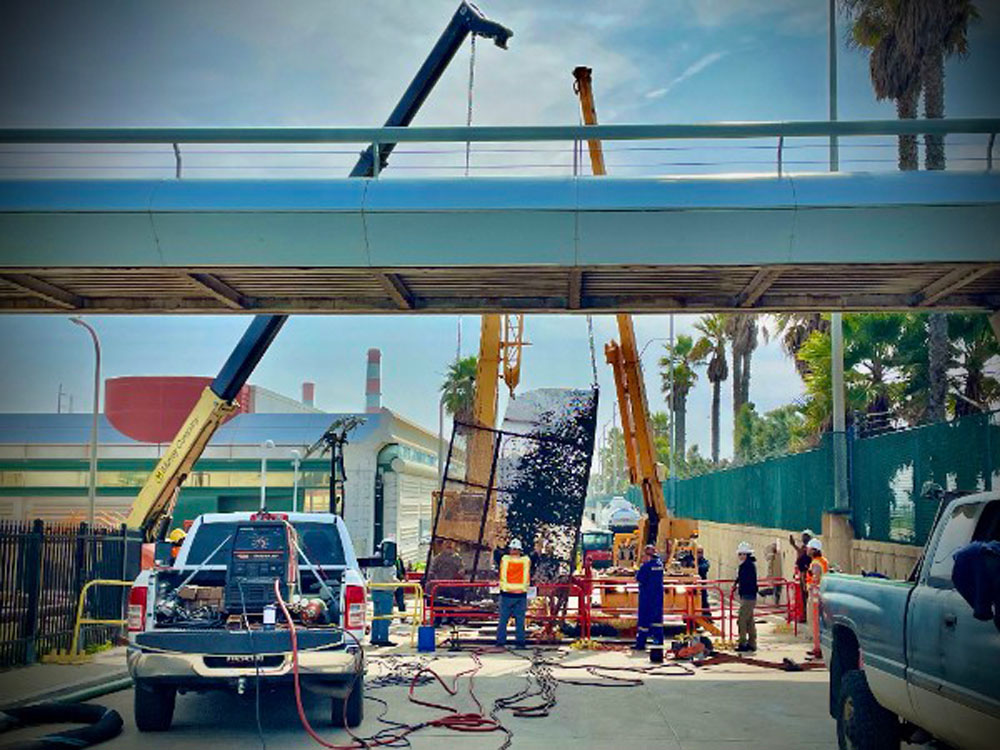
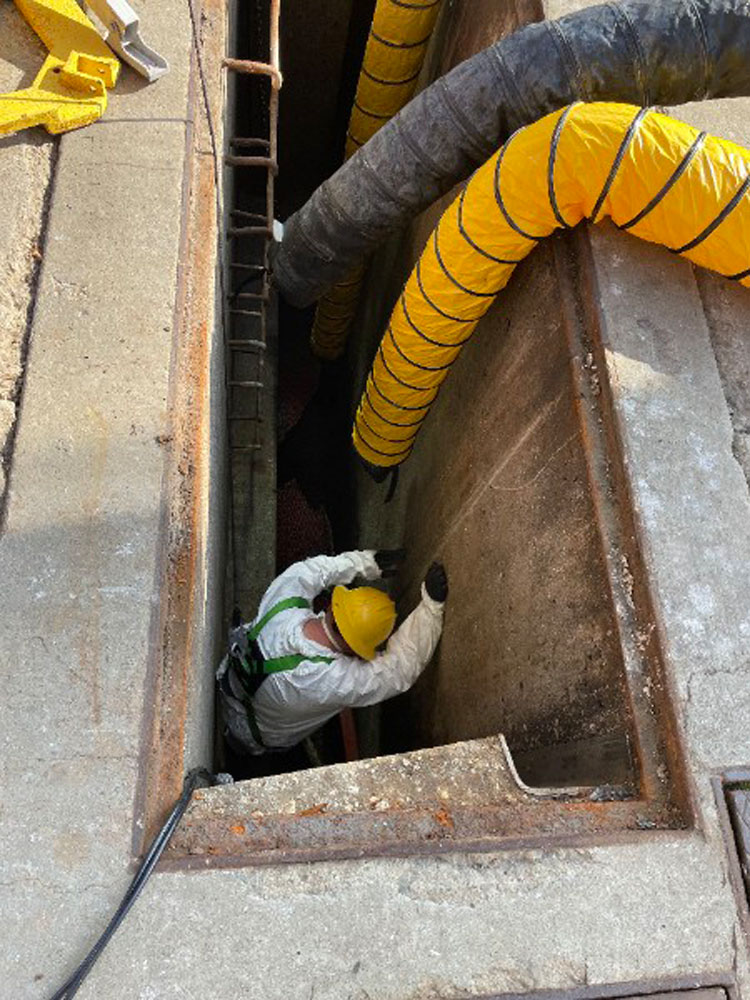
None of this happens with a two-man crew. A digester dive at Hyperion runs a full five-person extraction team on deck, and every diver assigned to this work carries a minimum of five years of commercial diving experience before they're cleared for it. When the diver surfaces, decontamination isn't optional or quick. Every piece of gear that went into the dome gets scrubbed down with a commercial bleach solution, and the diver goes through a full decon and rinse before anything comes off.
The Standards That Govern an Intrinsically Safe Dive
Work like this sits outside what most commercial diving companies are set up to do, which is exactly why it stays with a small number of qualified contractors. Myers Marine's divers on this work operate under the Association of Diving Contractors International's consensus standards for contaminated-water and hazardous-environment diving, and every diver on the team meets the qualification and medical requirements set out in OSHA 29 CFR 1910.424 for commercial diving operations.
Those standards are the reason the equipment list looks the way it does: intrinsically safe gear, bottled air instead of a compressor, fully enclosed suits, and a documented decon procedure after every dive. There's no shortcut version of this work that still meets code.
Every Hour Underwater Keeps Sewage Out of the Ocean
The reason digester maintenance matters goes well beyond keeping one piece of equipment running. A wastewater treatment plant exists to trap sewage, treat it, and return clean water to the system. When too many digesters go down at once, the plant loses the processing capacity it needs to keep up with incoming flow. At that point, the plant has to redirect wastewater around the affected units, and when a facility is pushed past what it can handle, that redirected flow is frequently the actual cause behind reports of sewage reaching the ocean. Most sewage-in-the-ocean incidents trace back to a treatment plant operating past capacity and rerouting flow it couldn't otherwise process, not to a single dramatic failure.
Keeping digesters running is how a plant like Hyperion stays inside its operating capacity in the first place. Every dive Myers Marine completes inside those domes is, in a very direct sense, a dive that keeps raw or undertreated sewage from reaching Santa Monica Bay. It's not a job that gets much visibility, but it sits alongside the oil spill response, marine debris recovery, and interceptor support work that defines what Myers Marine actually does in Southern California waters. Whether the risk is oil, plastic, or sewage, the pattern is the same: divers taking on the parts of the job nobody else will, so the ocean never sees the consequences of a system running past its limits.
This is the part of commercial diving that rarely makes it into a sales pitch. Nobody books a digester dive for the photo. Divers go into a sealed, zero-visibility tank filled with treated waste because the alternative, an overloaded plant rerouting untreated flow, is worse for everyone downstream, including the ocean itself. That's the trade Myers Marine's divers make every time they suit up for this work.
If your facility runs digesters, clarifiers, or any other confined-space asset that can't go offline for long, Myers Marine's maintenance and repair divers are equipped and qualified for exactly this kind of work. It's one piece of the broader environmental protection work our team takes on across Southern California's ports, reservoirs, and treatment facilities.